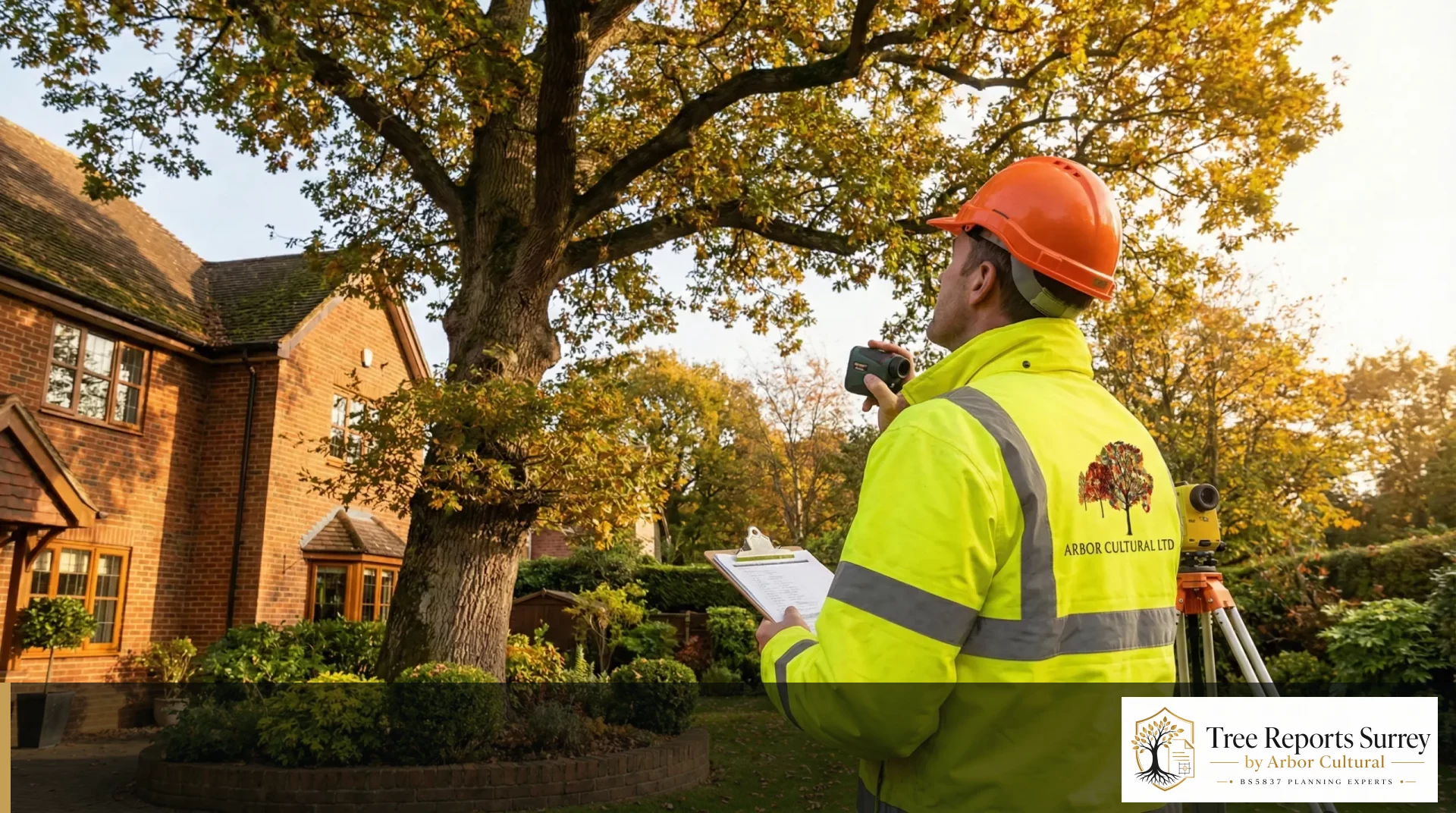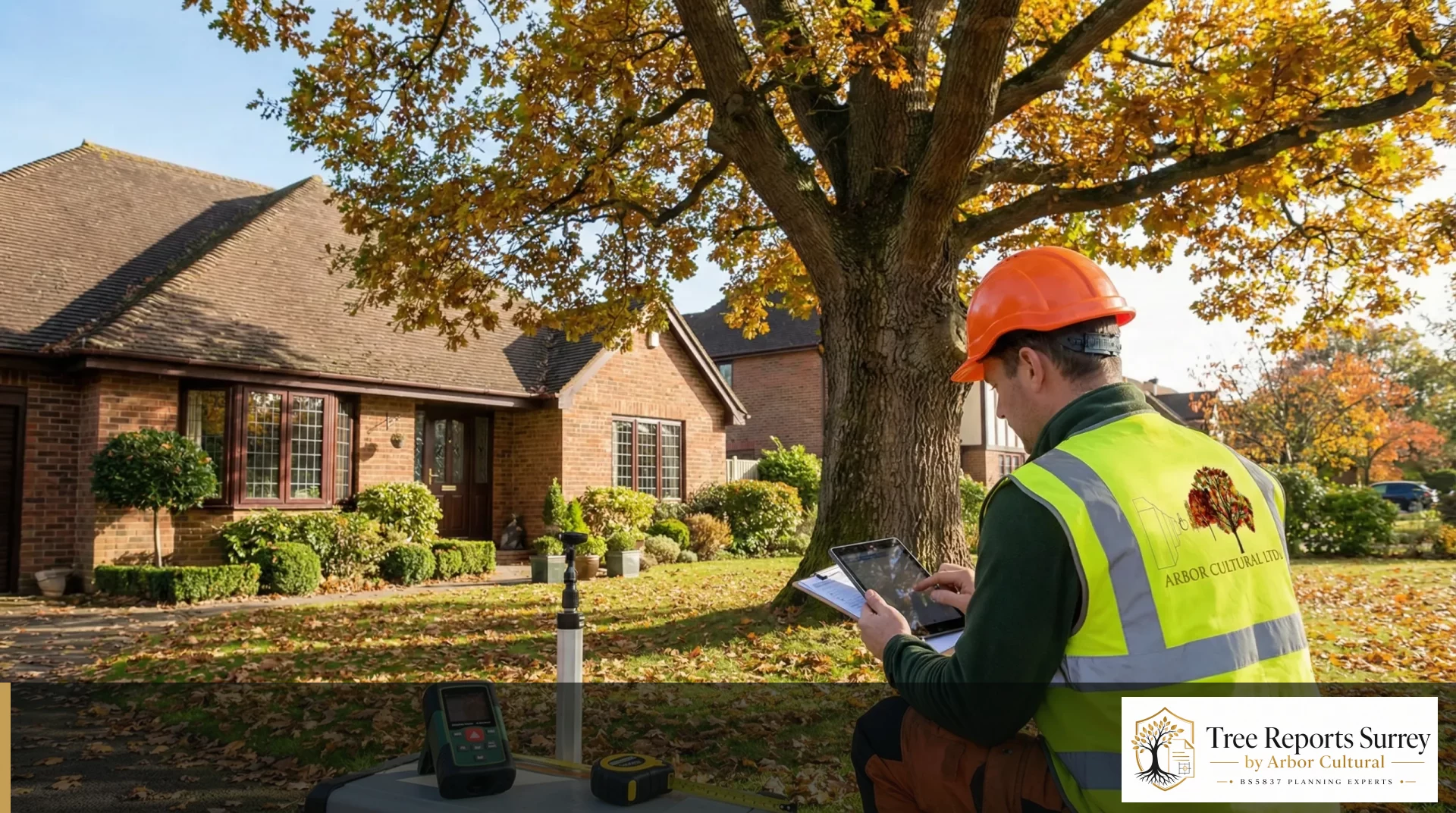
BS5837 Tree Reports and Tree Surveys in Lower Bourne
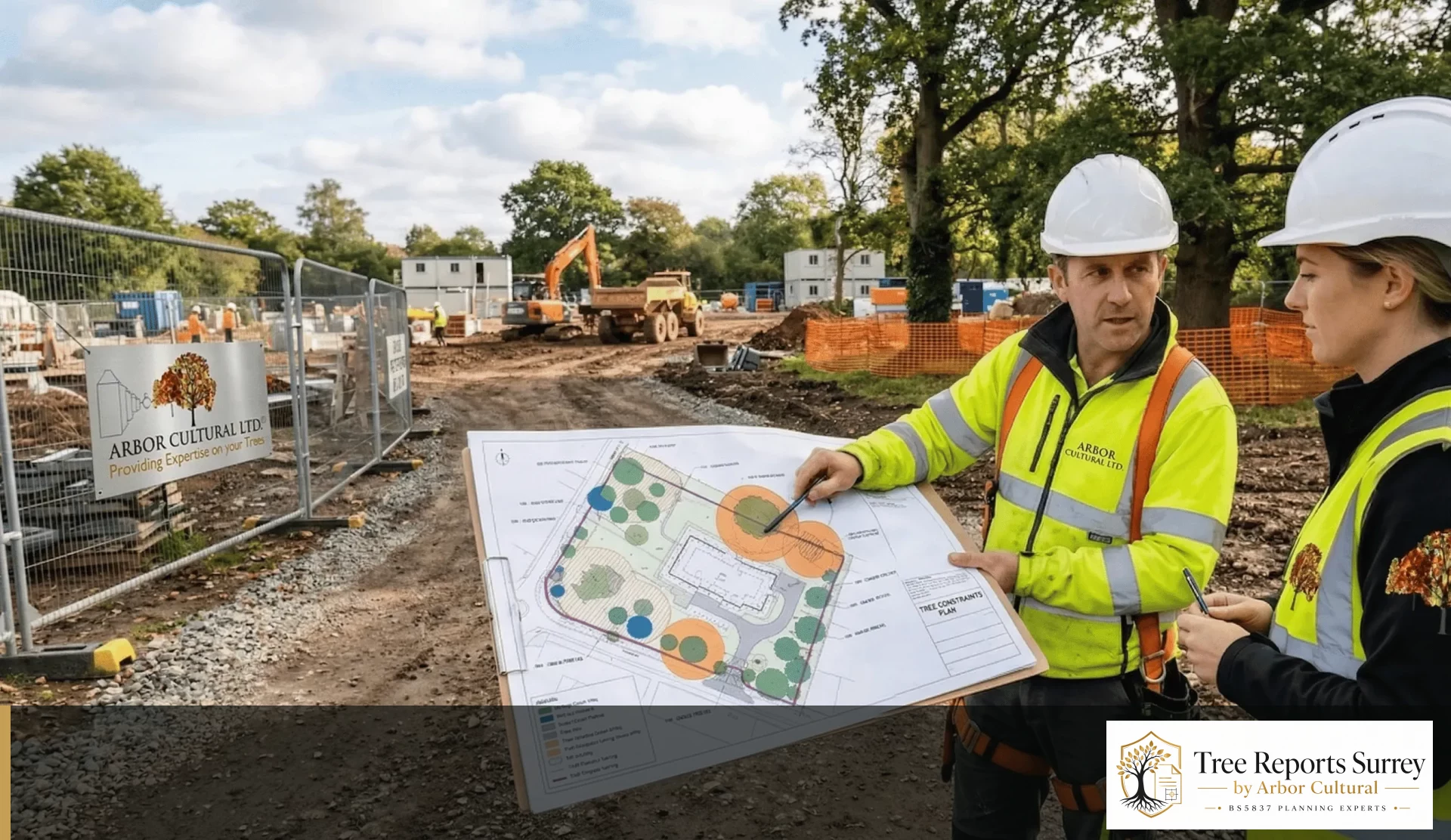
If the layout is still moving, survey and constraints information can help the architect make better decisions. If the design is already developed, the focus moves to assessing impacts and showing how retained trees can be protected.
Send the current proposal and the exact Waverley wording. We can then tell you whether you need the survey/constraints stage, an AIA against the live layout, or construction-stage AMS/TPP information. The scope can therefore remain proportionate to the current stage rather than commissioning later-stage documents prematurely.
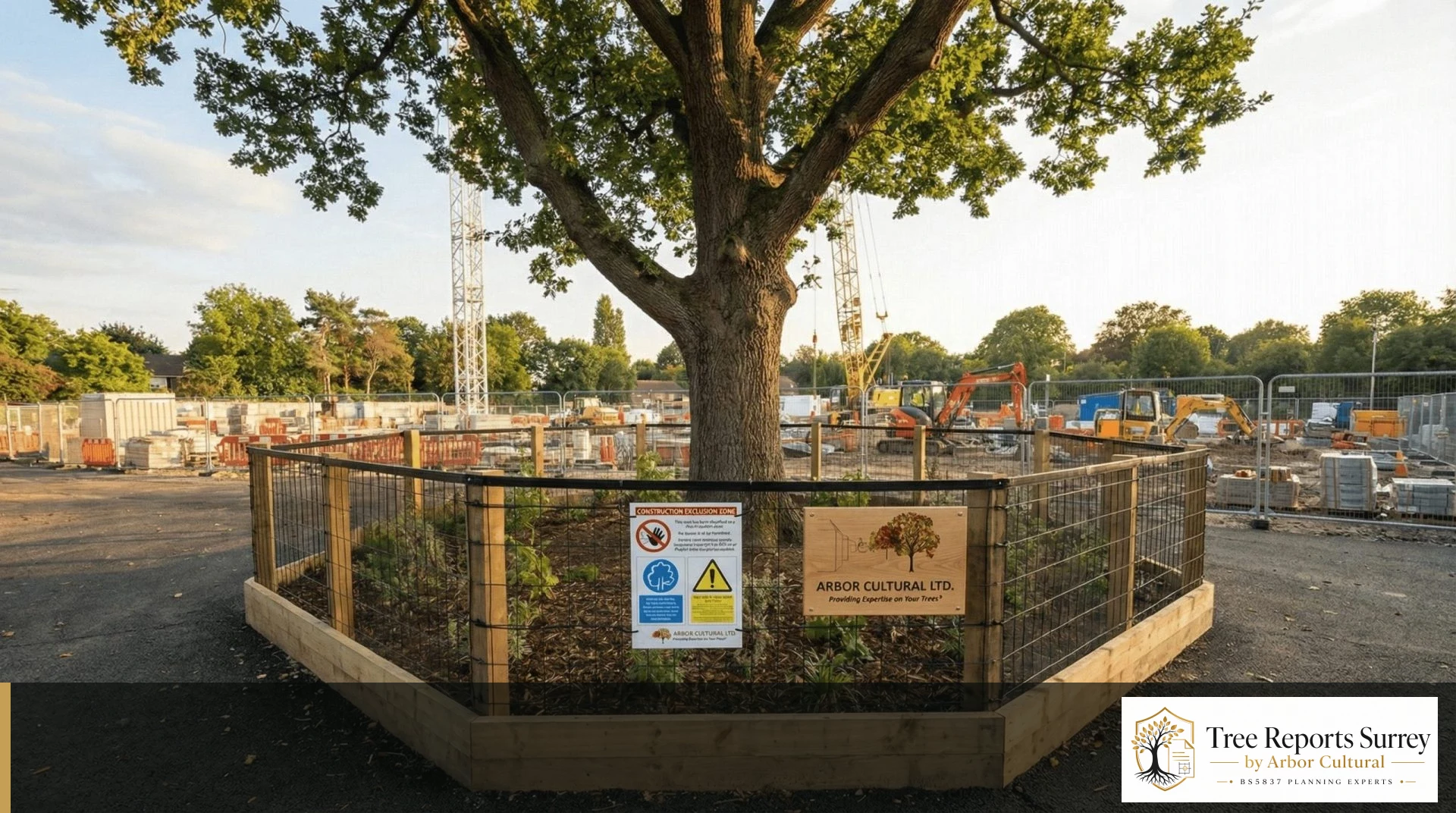
Once permission is in, the conversation changes from ‘is the design acceptable?’ to ‘how are we going to build this without breaching the tree conditions?’ The AMS, TPP and supervision points need to work on a real site, not just on paper.
A smaller Lower Bourne planning application still deserves a proper answer, but it does not need to be buried under unnecessary paperwork. The report should be proportionate, clear and focused on the tree issues that can actually influence the decision.
If the planning drawing has changed since the tree report was prepared, stop and send the revision before submission. A technically sound report attached to the wrong layout is an avoidable source of delay.
You do not need a perfect project pack to request a quote for Lower Bourne. The current PDF plans, the site address and the wording you have received are enough to start a sensible review in most cases.
If the council has asked for tree information, send the exact wording.
A request for a “tree report” does not always mean the same document. At the early design stage it may mean a BS5837 Tree Survey and Tree Constraints Plan. Once a planning layout exists, the missing piece may be an Arboricultural Impact Assessment. After permission, the authority may be asking for an Arboricultural Method Statement, Tree Protection Plan or supervision before work starts.
You do not need to make that decision yourself. Forward the email, validation request, tree-officer comment or planning condition and include the current drawings. We will review what is already available and explain the next useful step before you instruct.