BS5837 Tree Reports and Tree Surveys in Leatherhead
A request for tree information can arrive at any point in the planning process. The important thing is to establish what the project has already done, what the authority is asking for now and which drawings are current. From there the next step is usually straightforward.
Send the plans plus any Mole Valley wording you already have. If the design is still flexible, we can use the survey/constraints information to help the architect. If permission is already in place, we can concentrate on the condition and site-protection side instead.
For Leatherhead applications, early coordination between the architect and arboricultural consultant helps avoid avoidable conflicts with roots, canopies, access and services. Where the proposal is already finalised, the focus shifts to explaining those relationships clearly to the planning authority.
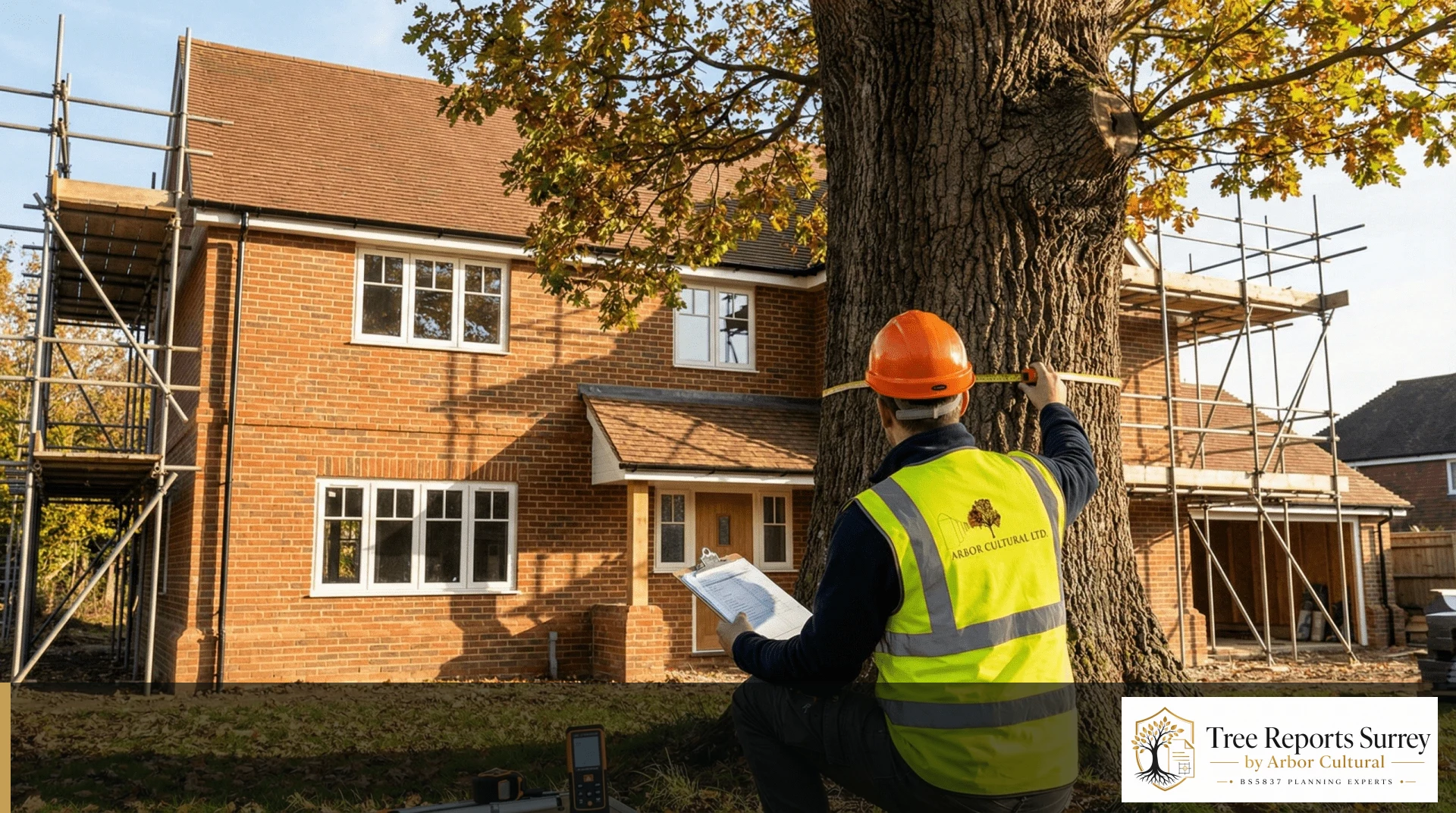
For this sort of job we normally check how close the excavation gets, whether the contractor has enough working room, what happens with drainage/access, and whether the finished extension still makes sense next to the retained crowns.
If the architect is still changing the Leatherhead layout, send the current drawing now rather than waiting for the ‘final’ version. Tree information is most valuable while the footprint, access and service routes can still move without causing a redesign exercise later.
At feasibility stage in Leatherhead, the aim is to get enough reliable tree information to make the next design decision well. The detailed impact and construction documents can then follow when the project is ready for them.
If the architect changes the Leatherhead design after the report is drafted, send the new drawing before the application goes in. Updating a live technical package is normal; submitting mismatched information is what causes avoidable questions.
If the council has asked for tree information, send the exact wording.
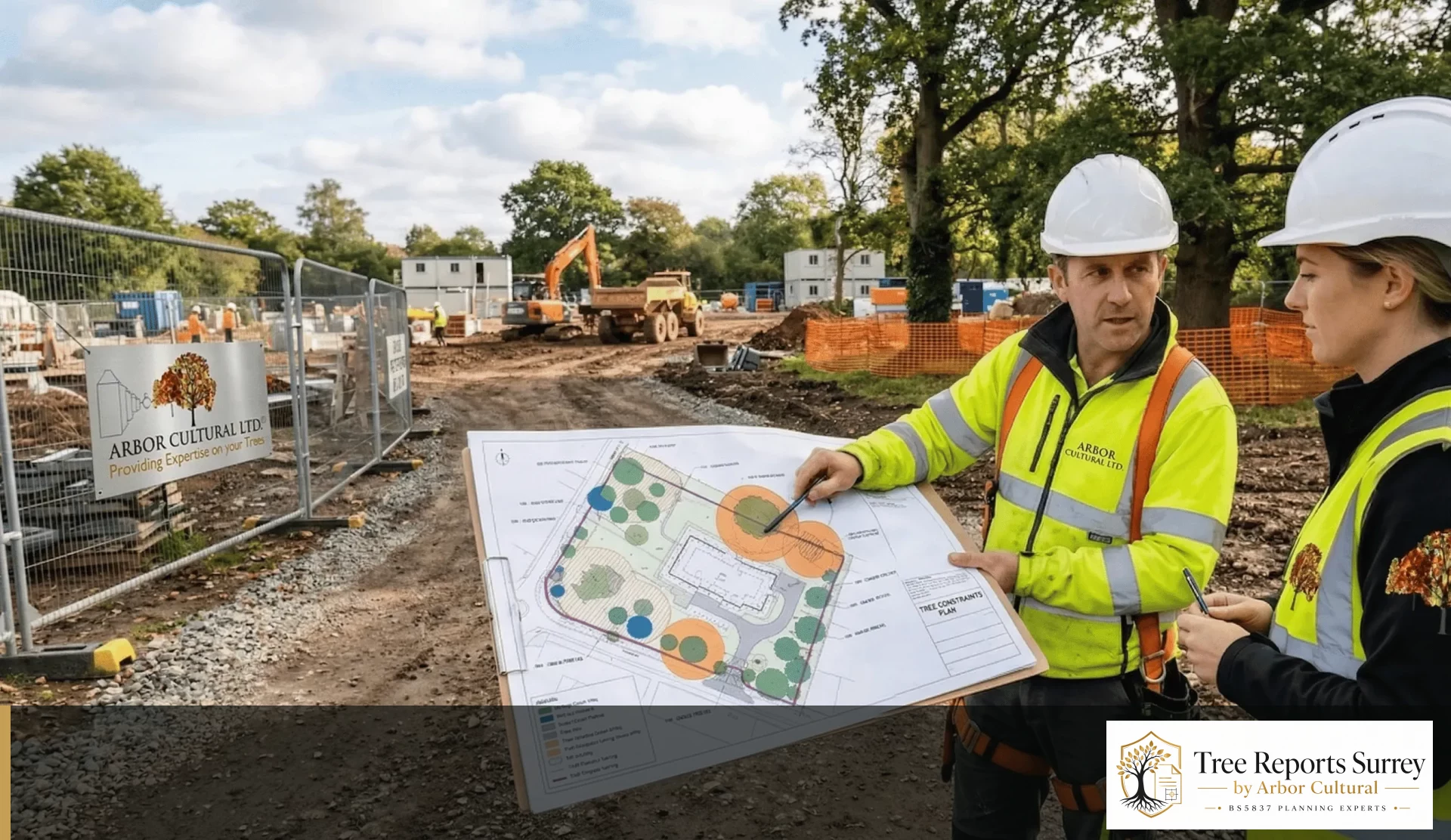
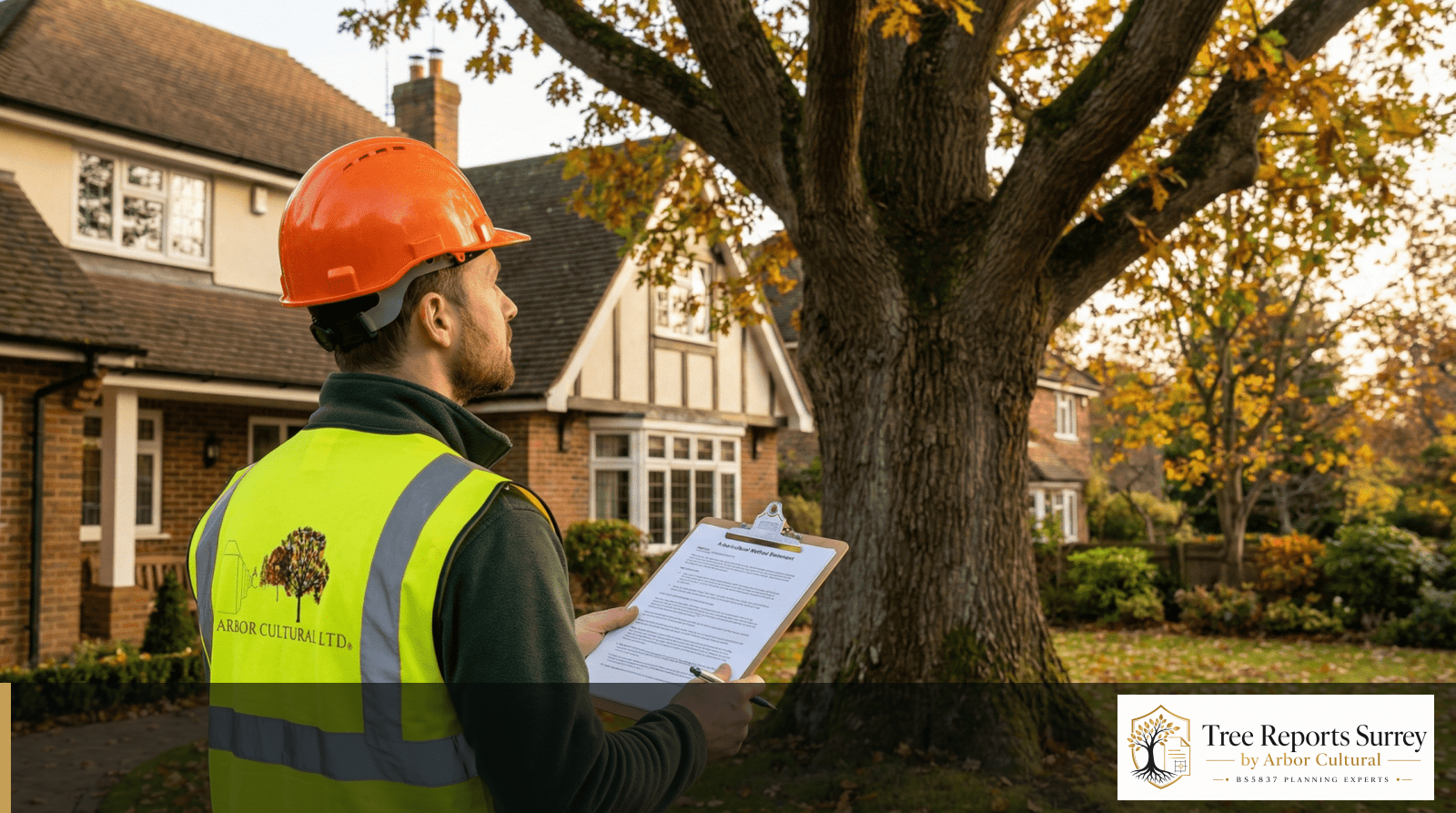
A request for a “tree report” does not always mean the same document. At the early design stage it may mean a BS5837 Tree Survey and Tree Constraints Plan. Once a planning layout exists, the missing piece may be an Arboricultural Impact Assessment. After permission, the authority may be asking for an Arboricultural Method Statement, Tree Protection Plan or supervision before work starts.
You do not need to make that decision yourself. Forward the email, validation request, tree-officer comment or planning condition and include the current drawings. We will review what is already available and explain the next useful step before you instruct.