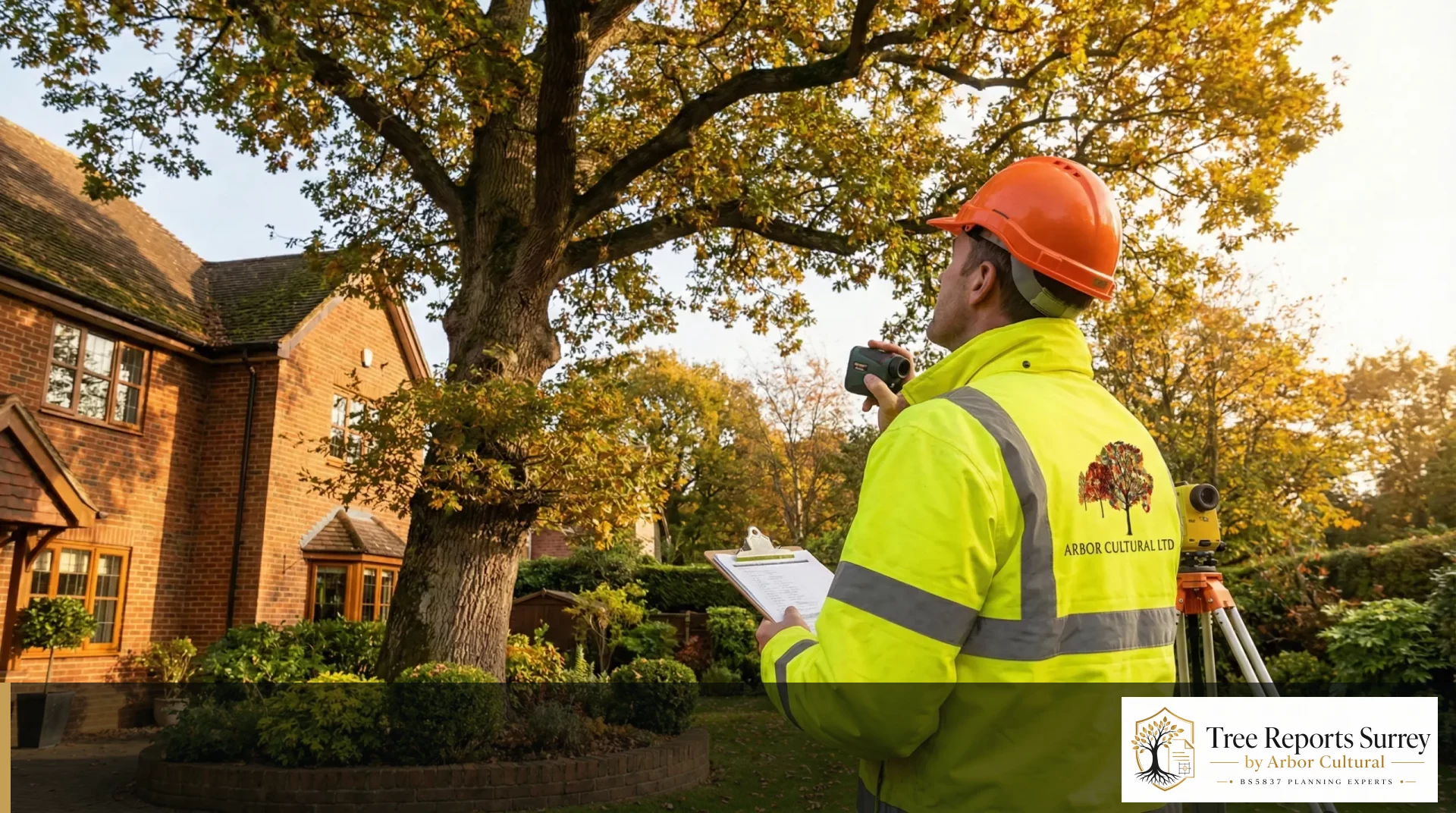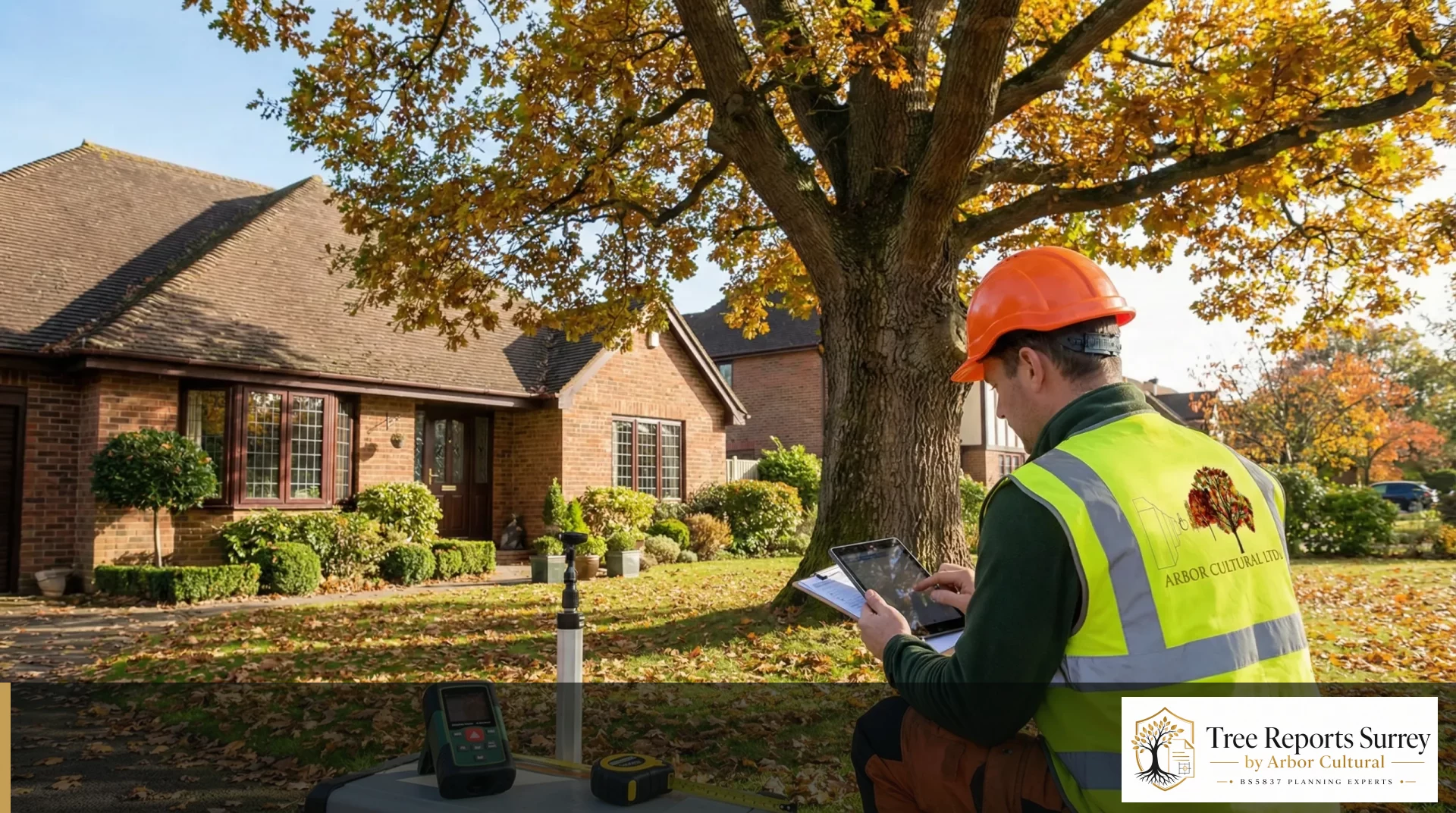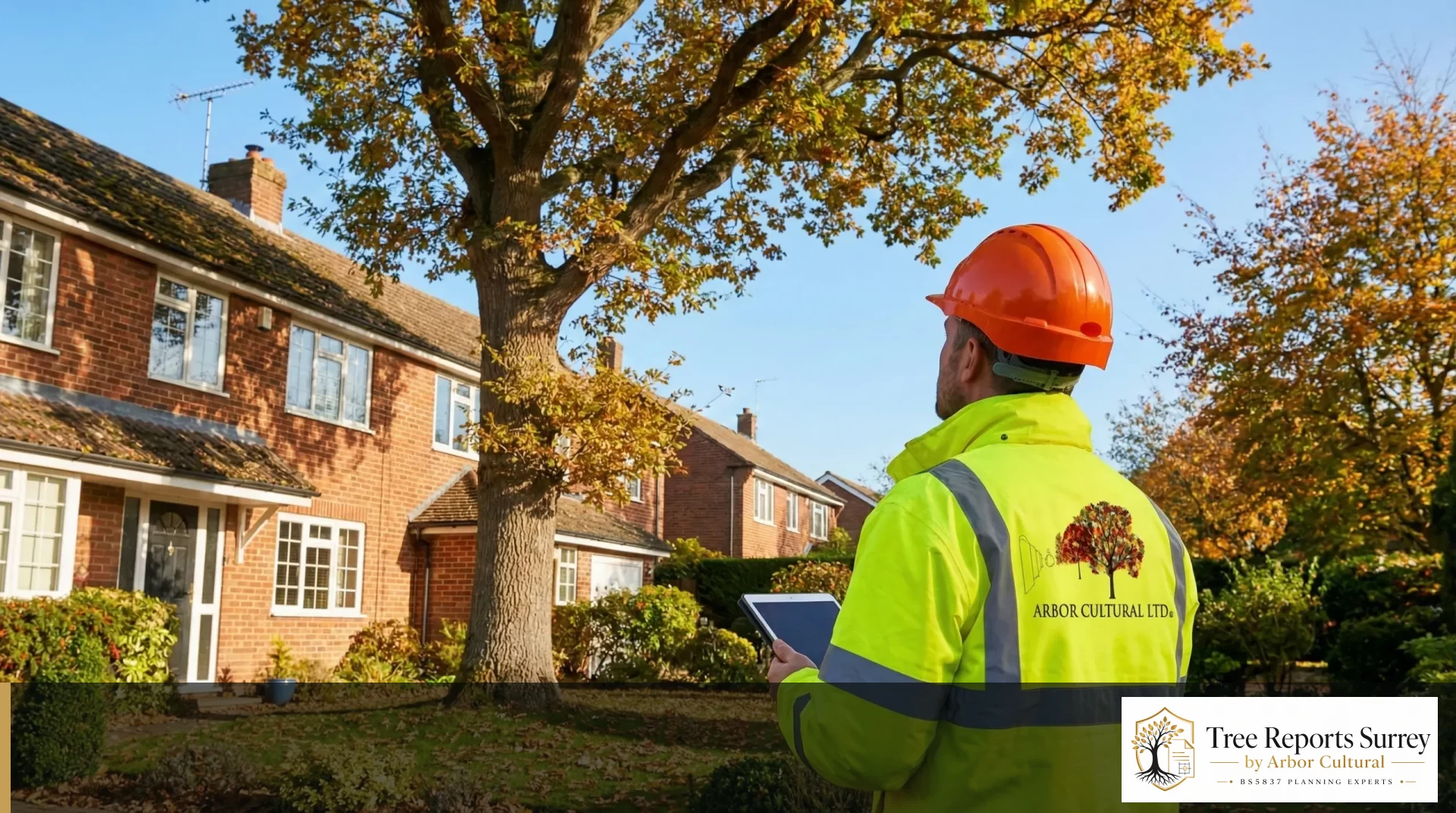
BS5837 Tree Reports and Tree Surveys in Fetcham
Programme matters. A survey may need a site visit; an AIA needs a stable enough design to assess; construction documents may depend on approved information. Telling us the deadline early helps set realistic expectations before instruction.
Send the plans plus any Mole Valley wording you already have. If the design is still flexible, we can use the survey/constraints information to help the architect. If permission is already in place, we can concentrate on the condition and site-protection side instead.
For this sort of job we normally check how close the excavation gets, whether the contractor has enough working room, what happens with drainage/access, and whether the finished extension still makes sense next to the retained crowns.
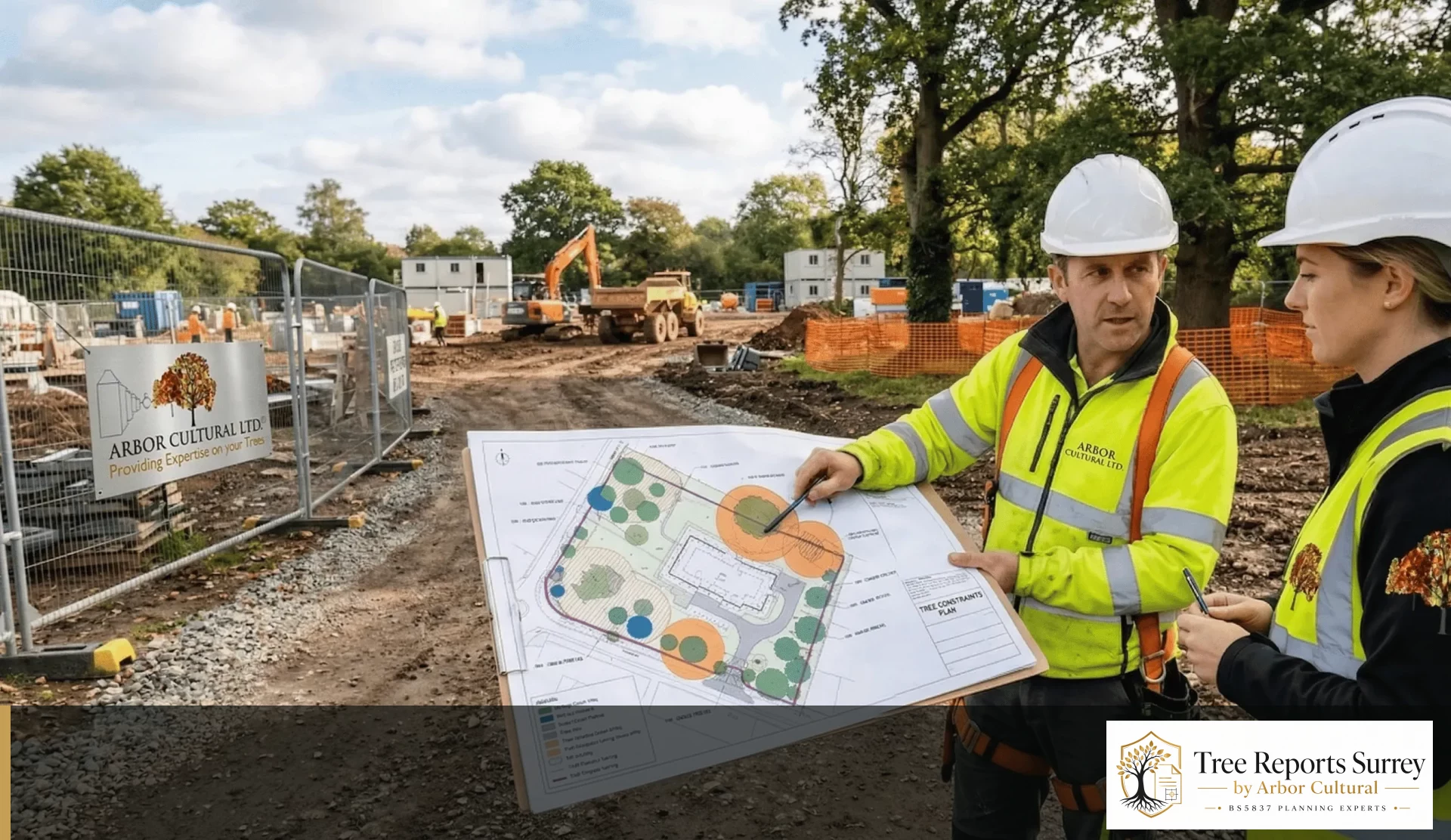
Architect-led work in Fetcham is much easier when everybody uses the same base information. Tree references, crowns, RPAs and the planning layout should stay coordinated from the first design discussion through to the AIA and any later protection documents.
More pages do not make a stronger Fetcham submission by themselves. What matters is accurate tree information, a current plan, a clear explanation of the impact and mitigation that can genuinely be delivered.
Homeowner, architect or developer — the starting point is the same. Show us what is being proposed and what the authority has asked for. We can deal with the report names after that.
If the council has asked for tree information, send the exact wording.
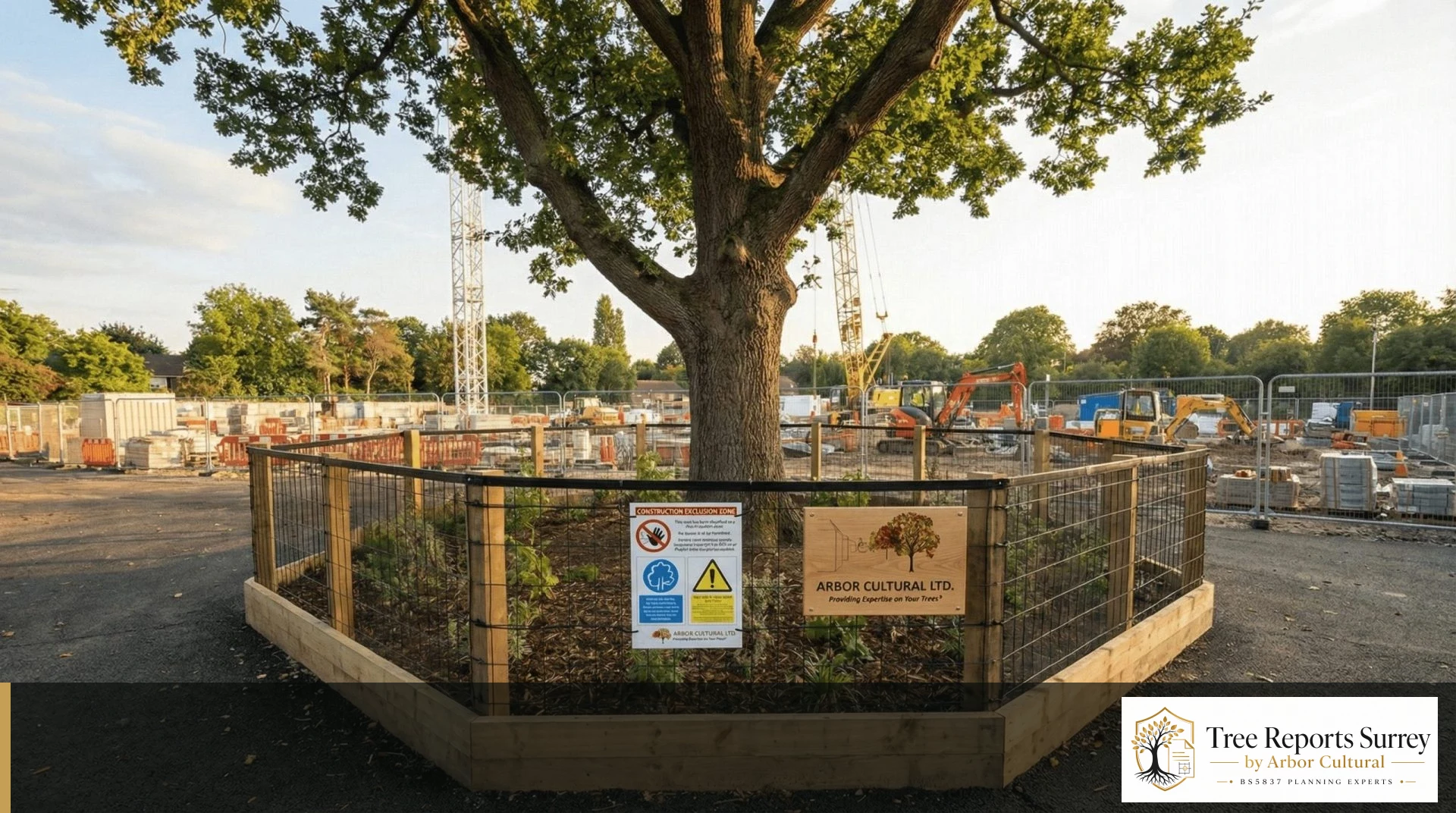
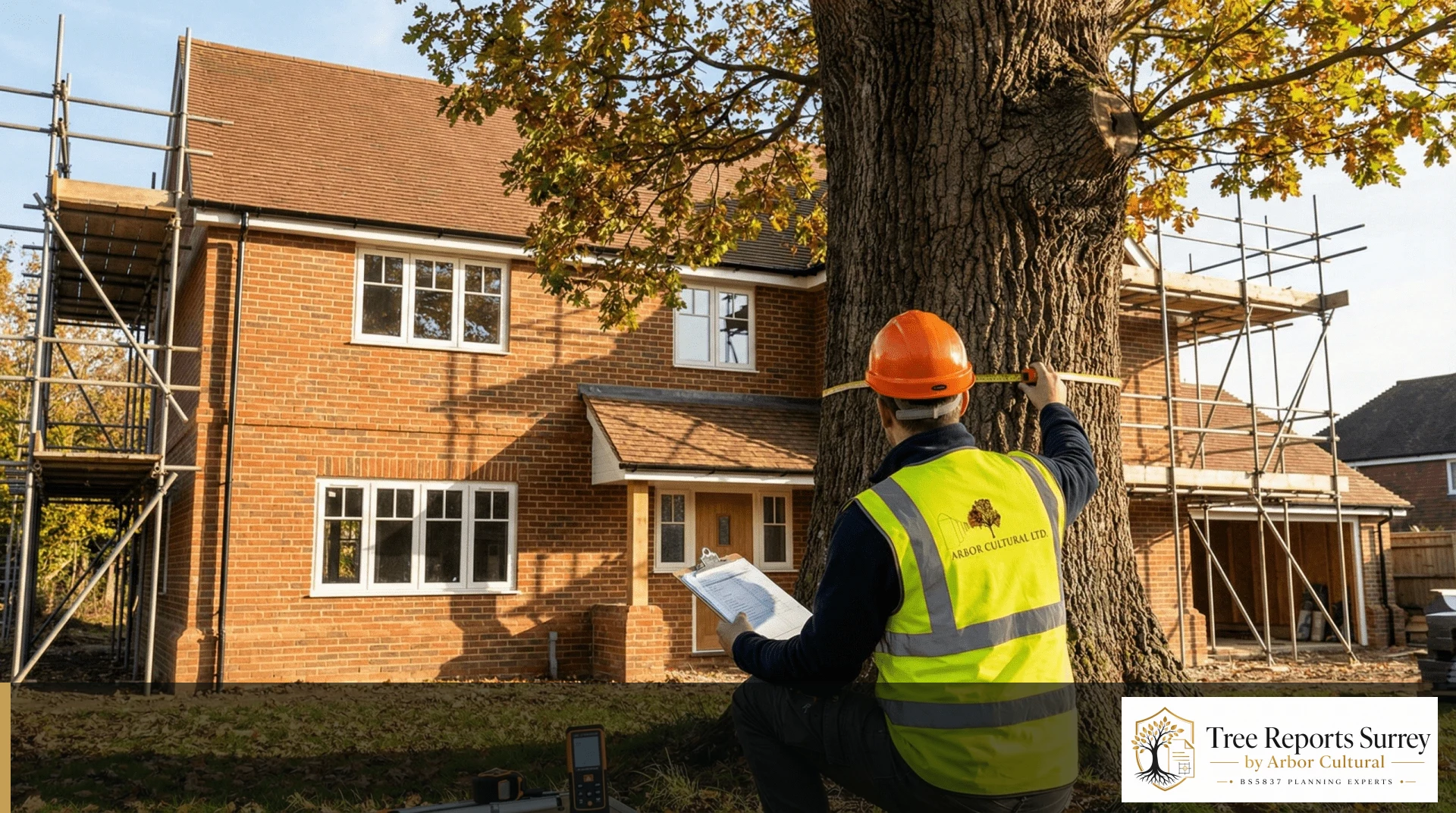
A request for a “tree report” does not always mean the same document. At the early design stage it may mean a BS5837 Tree Survey and Tree Constraints Plan. Once a planning layout exists, the missing piece may be an Arboricultural Impact Assessment. After permission, the authority may be asking for an Arboricultural Method Statement, Tree Protection Plan or supervision before work starts.
You do not need to make that decision yourself. Forward the email, validation request, tree-officer comment or planning condition and include the current drawings. We will review what is already available and explain the next useful step before you instruct.