BS5837 Tree Reports and Tree Surveys in Little Bookham
If the layout is still moving, survey and constraints information can help the architect make better decisions. If the design is already developed, the focus moves to assessing impacts and showing how retained trees can be protected.
Send the plans plus any Mole Valley wording you already have. If the design is still flexible, we can use the survey/constraints information to help the architect. If permission is already in place, we can concentrate on the condition and site-protection side instead.
A new footprint changes several things at once. We want to see the tree constraints, future crown space, access and how the site will actually be built before the layout becomes too expensive to move.
If the first thing you have been told is simply ‘you need a tree report’ for Little Bookham, forward the wording. That phrase can mean anything from baseline survey information to an AIA or a construction-stage Method Statement, and there is no benefit in guessing.
More pages do not make a stronger Little Bookham submission by themselves. What matters is accurate tree information, a current plan, a clear explanation of the impact and mitigation that can genuinely be delivered.
You do not need a perfect project pack to request a quote for Little Bookham. The current PDF plans, the site address and the wording you have received are enough to start a sensible review in most cases.
If the council has asked for tree information, send the exact wording.
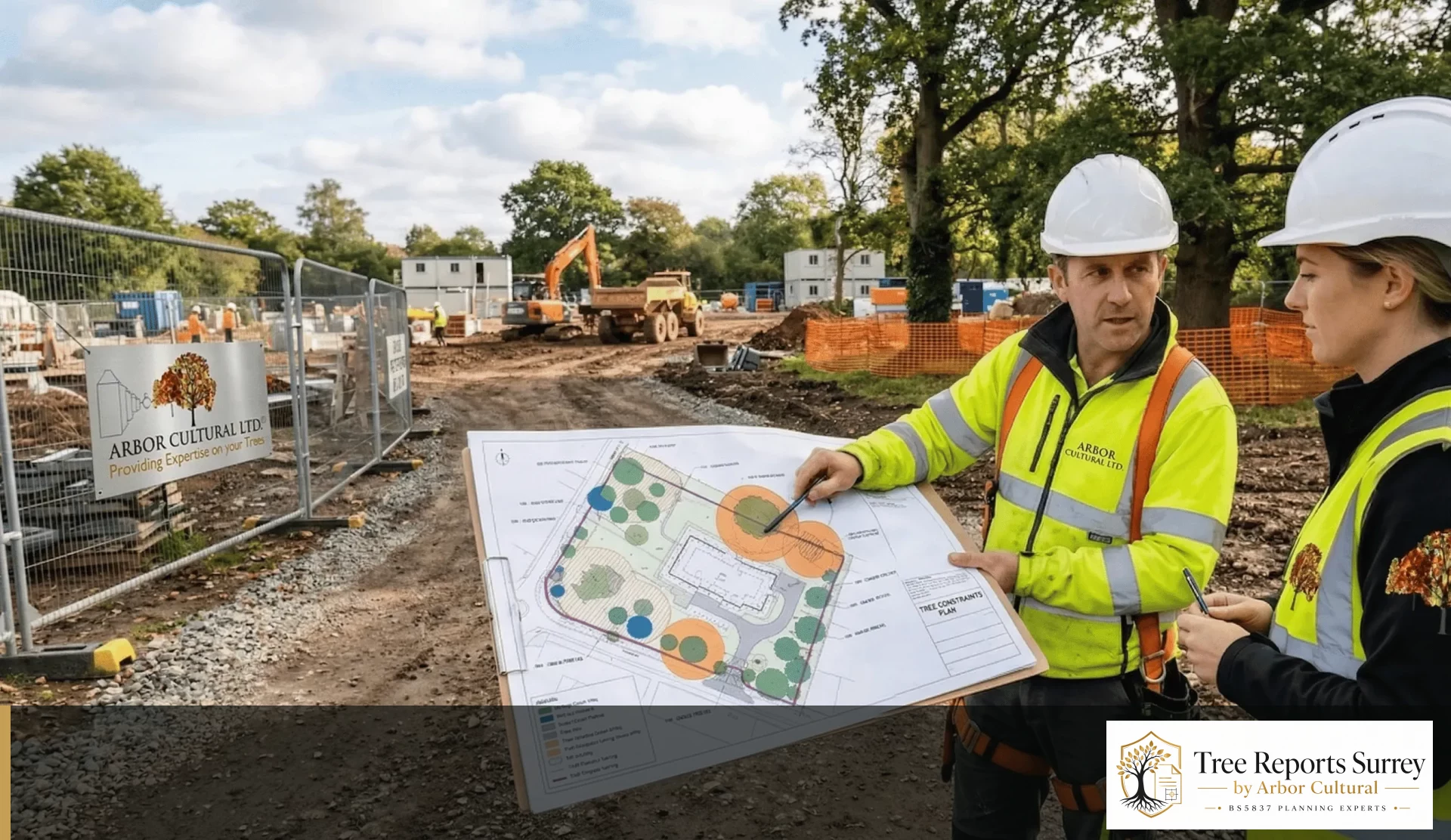
A request for a “tree report” does not always mean the same document. At the early design stage it may mean a BS5837 Tree Survey and Tree Constraints Plan. Once a planning layout exists, the missing piece may be an Arboricultural Impact Assessment. After permission, the authority may be asking for an Arboricultural Method Statement, Tree Protection Plan or supervision before work starts.
You do not need to make that decision yourself. Forward the email, validation request, tree-officer comment or planning condition and include the current drawings. We will review what is already available and explain the next useful step before you instruct.