BS5837 Tree Reports and Tree Surveys in Claygate
Some enquiries need baseline survey information. Others already have a survey and need an AIA, AMS, Tree Protection Plan or supervision. We review what is already there before recommending more work.
For a Claygate job, send the actual Elmbridge request and latest plan. We’ll scope the report around the real conflict — footprint, roots, crowns, access, services or construction — rather than applying a generic document package to a site-specific planning issue.
Tight plots run out of space quickly. Crowns, RPAs, parking, access and the contractor all want the same ground. A small design move early can save a much bigger tree argument later.
Trees outside the boundary can still matter to a Claygate proposal. A neighbouring crown can influence the finished relationship and a rooting area can extend into the site. We look at the physical constraint, not just who owns the trunk.
Once permission is granted, the emphasis can change quickly. Elmbridge Borough Council may no longer need another explanation of the planning layout; it may want clear pre-start protection, construction methods and evidence that sensitive work is being supervised properly.
For the fastest useful response on a Claygate enquiry, put the address, latest drawings and council email in the same message. Add the topo and any old report if you have them. That is usually enough for a consultant to understand where the project has reached.
If the council has asked for tree information, send the exact wording.
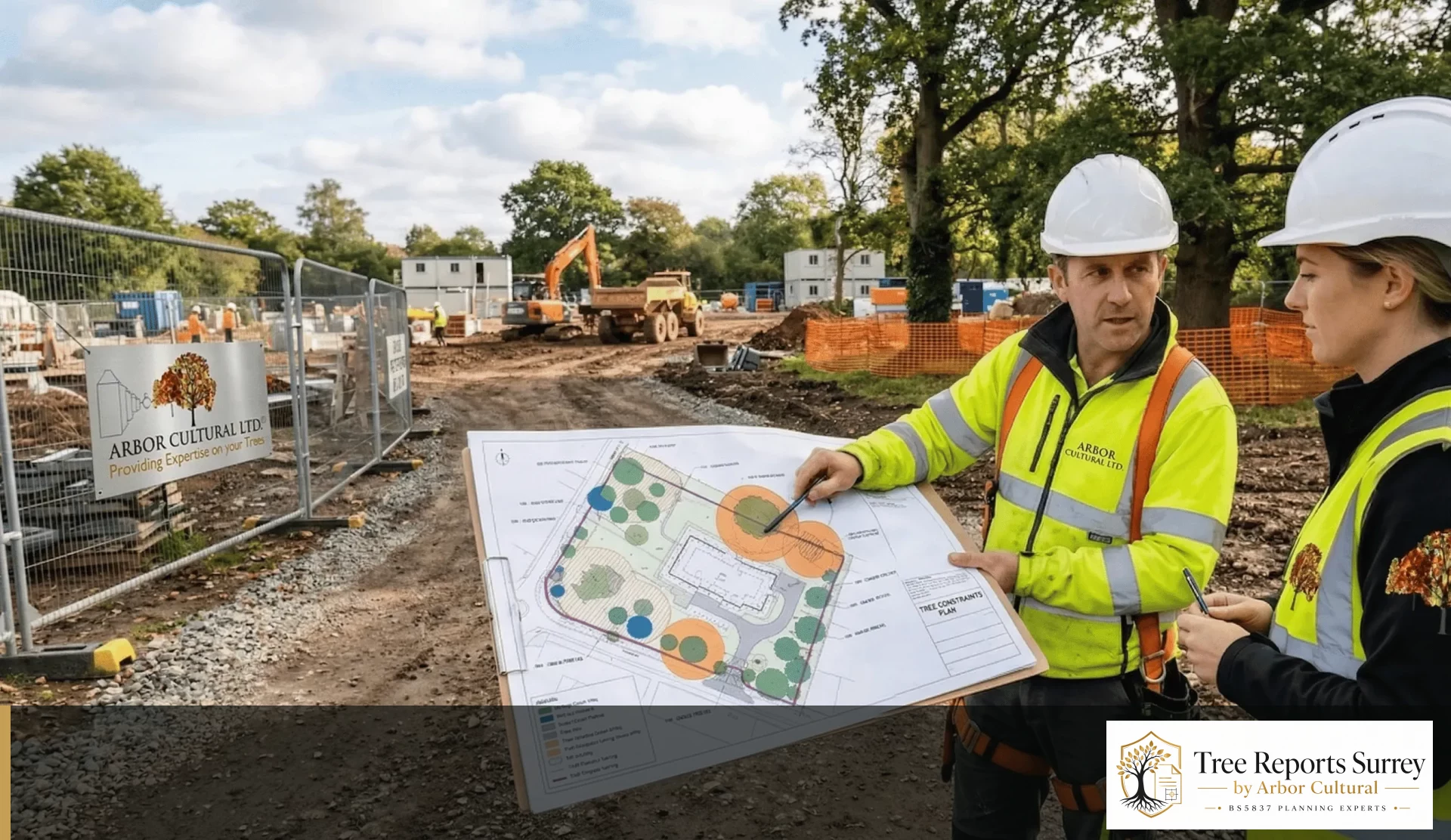
A request for a “tree report” does not always mean the same document. At the early design stage it may mean a BS5837 Tree Survey and Tree Constraints Plan. Once a planning layout exists, the missing piece may be an Arboricultural Impact Assessment. After permission, the authority may be asking for an Arboricultural Method Statement, Tree Protection Plan or supervision before work starts.
You do not need to make that decision yourself. Forward the email, validation request, tree-officer comment or planning condition and include the current drawings. We will review what is already available and explain the next useful step before you instruct.