BS5837 Tree Reports and Tree Surveys in Thorpe
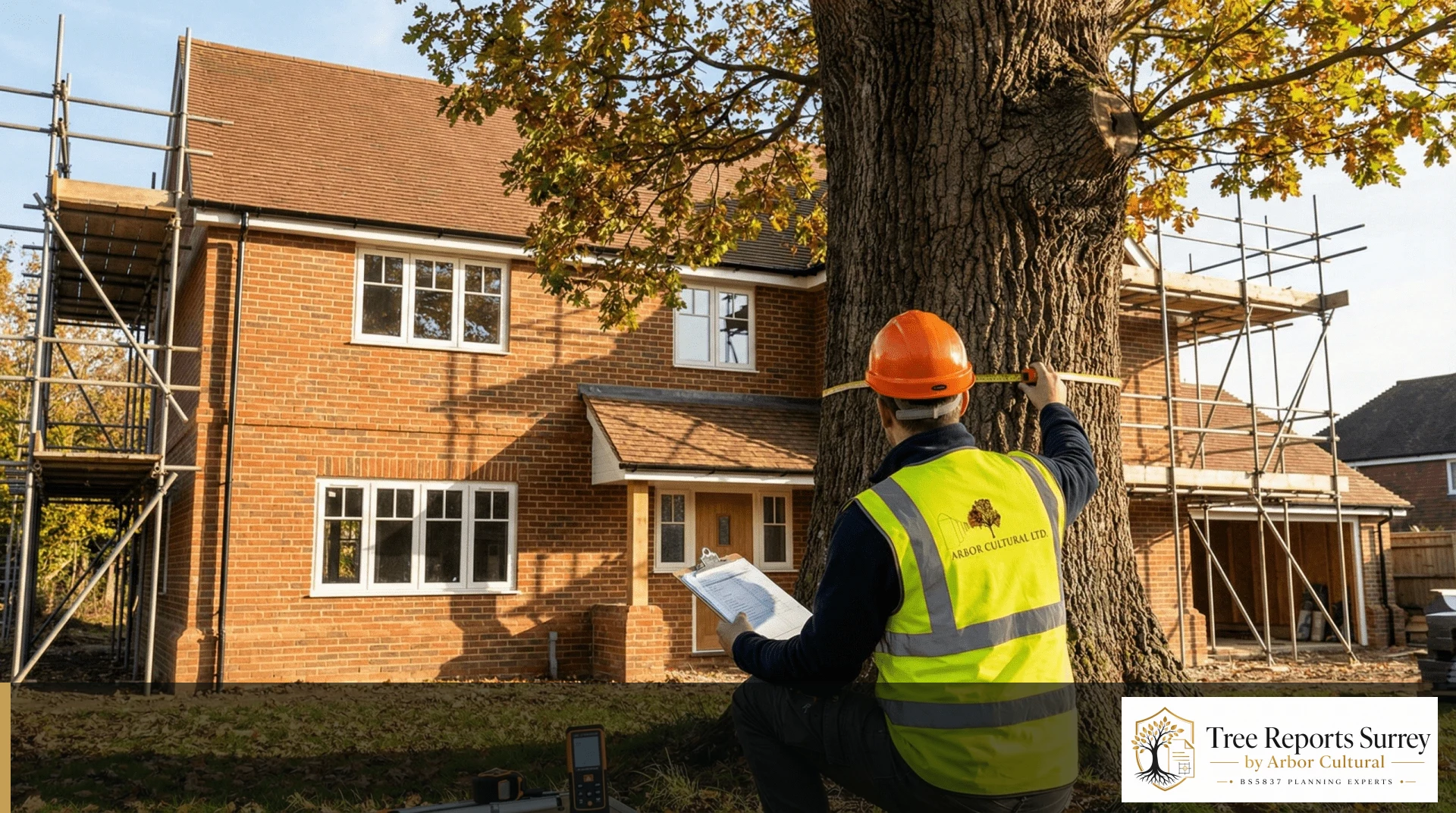
The issue may be foundations, access, surfacing, drainage, services, crown space or construction logistics rather than the building footprint alone. The report should deal with the whole relationship, not one measurement in isolation.
Send the plans plus the Runnymede request or condition. We’ll tell you whether the urgent piece is design-stage survey information, planning justification, or the AMS/TPP and supervision needed before construction.
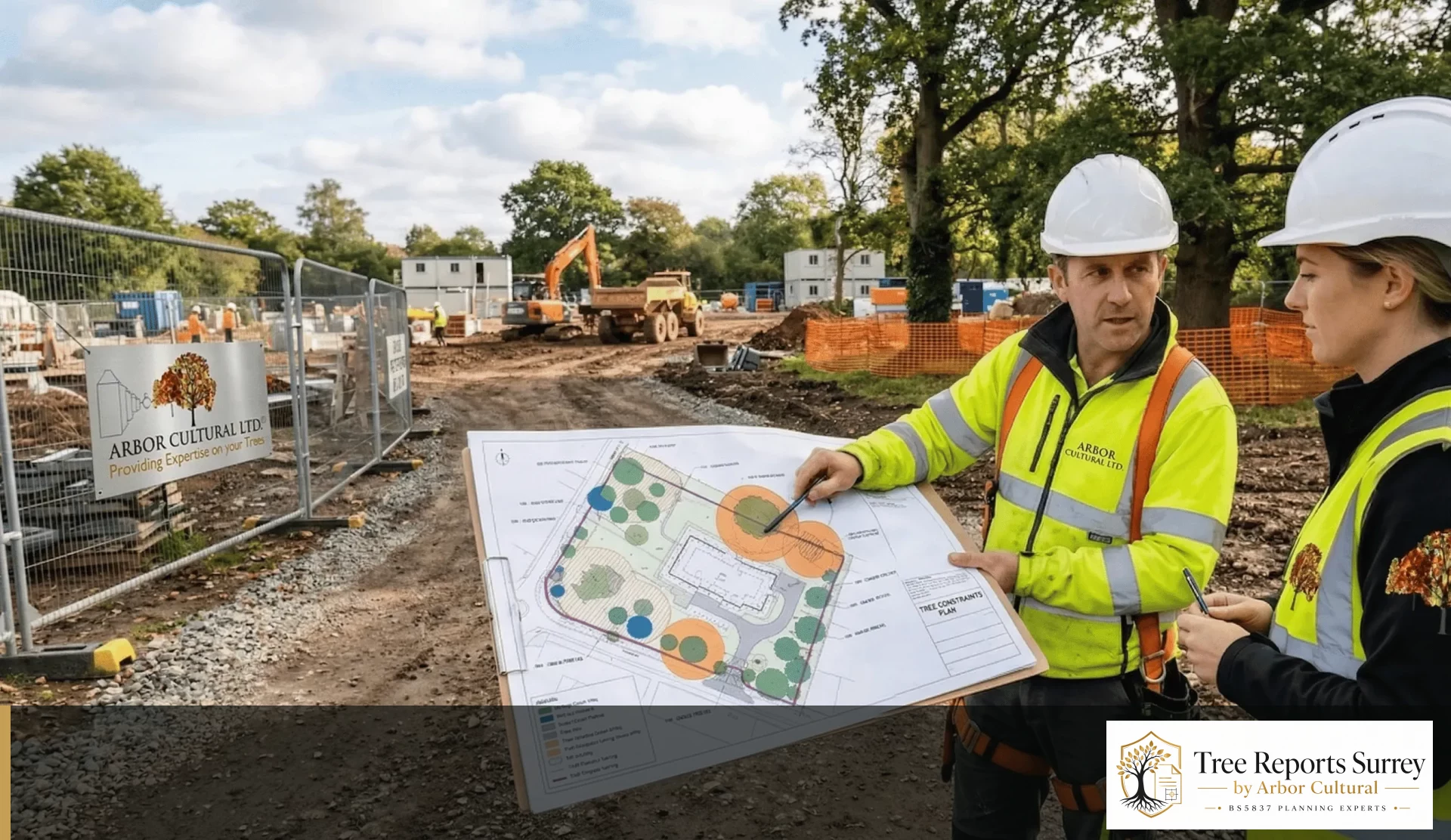
A new footprint changes several things at once. We want to see the tree constraints, future crown space, access and how the site will actually be built before the layout becomes too expensive to move.
Drainage and utilities often arrive late in the design process. If those routes are still being worked out for the Thorpe project, tell us. A service trench can create a more significant root conflict than the building itself.
Where several trees are retained on a Thorpe scheme, consistent references are important. The architect, planning officer, contractor and arboriculturist should all be talking about the same T1, T2 and group references as the project develops.
If you are managing several sites around Thorpe, send each site with its own drawings and authority wording. The process can be consistent without pretending the sites have identical tree constraints.
If the council has asked for tree information, send the exact wording.
A request for a “tree report” does not always mean the same document. At the early design stage it may mean a BS5837 Tree Survey and Tree Constraints Plan. Once a planning layout exists, the missing piece may be an Arboricultural Impact Assessment. After permission, the authority may be asking for an Arboricultural Method Statement, Tree Protection Plan or supervision before work starts.
You do not need to make that decision yourself. Forward the email, validation request, tree-officer comment or planning condition and include the current drawings. We will review what is already available and explain the next useful step before you instruct.