BS5837 Tree Reports and Tree Surveys in Mayford
Programme matters. A survey may need a site visit; an AIA needs a stable enough design to assess; construction documents may depend on approved information. Telling us the deadline early helps set realistic expectations before instruction.
If you already have a survey, send it. If you already have permission, send the condition. We can usually work out very quickly whether the next useful step is an update, an AIA, an AMS/TPP or site supervision.
A drive or access can cause the tree problem even when the building is nowhere near the RPA. Excavation, level changes, compaction and site traffic all count, so we look at them as part of the actual scheme.
Replacement dwellings and infill schemes in Mayford need more than a simple overlap check. Future crown space, garden use, access, parking and the way the site is built can all influence whether the long-term tree/building relationship is sensible.
Where several trees are retained on a Mayford scheme, consistent references are important. The architect, planning officer, contractor and arboriculturist should all be talking about the same T1, T2 and group references as the project develops.
If the drainage or utility routes are not fixed on the Mayford project, mention that now. Keeping a trench away from important roots on the drawing is usually easier than engineering a solution after the route has been committed.
If the council has asked for tree information, send the exact wording.
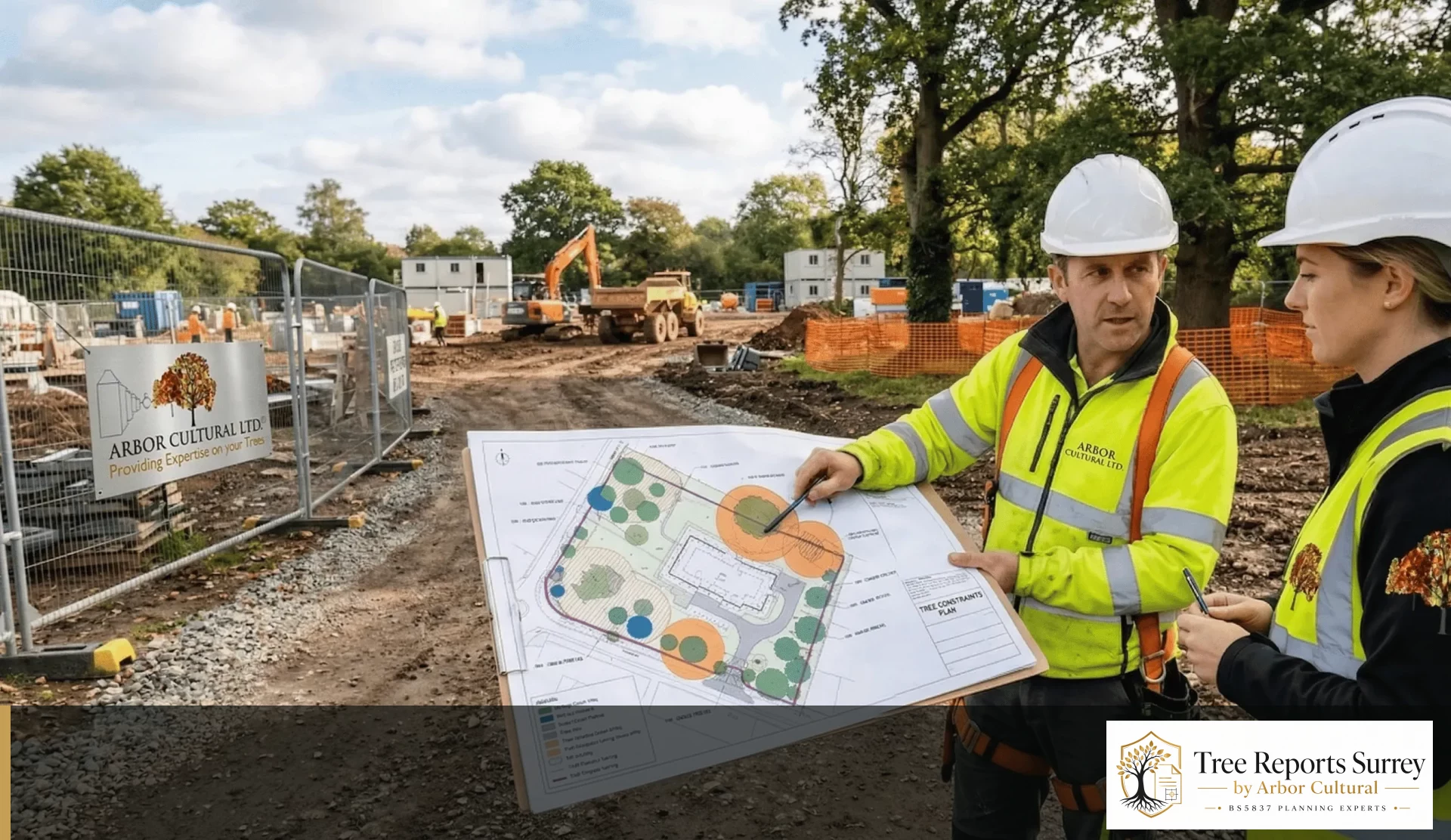
A request for a “tree report” does not always mean the same document. At the early design stage it may mean a BS5837 Tree Survey and Tree Constraints Plan. Once a planning layout exists, the missing piece may be an Arboricultural Impact Assessment. After permission, the authority may be asking for an Arboricultural Method Statement, Tree Protection Plan or supervision before work starts.
You do not need to make that decision yourself. Forward the email, validation request, tree-officer comment or planning condition and include the current drawings. We will review what is already available and explain the next useful step before you instruct.