BS5837 Tree Reports and Tree Surveys in Brookwood
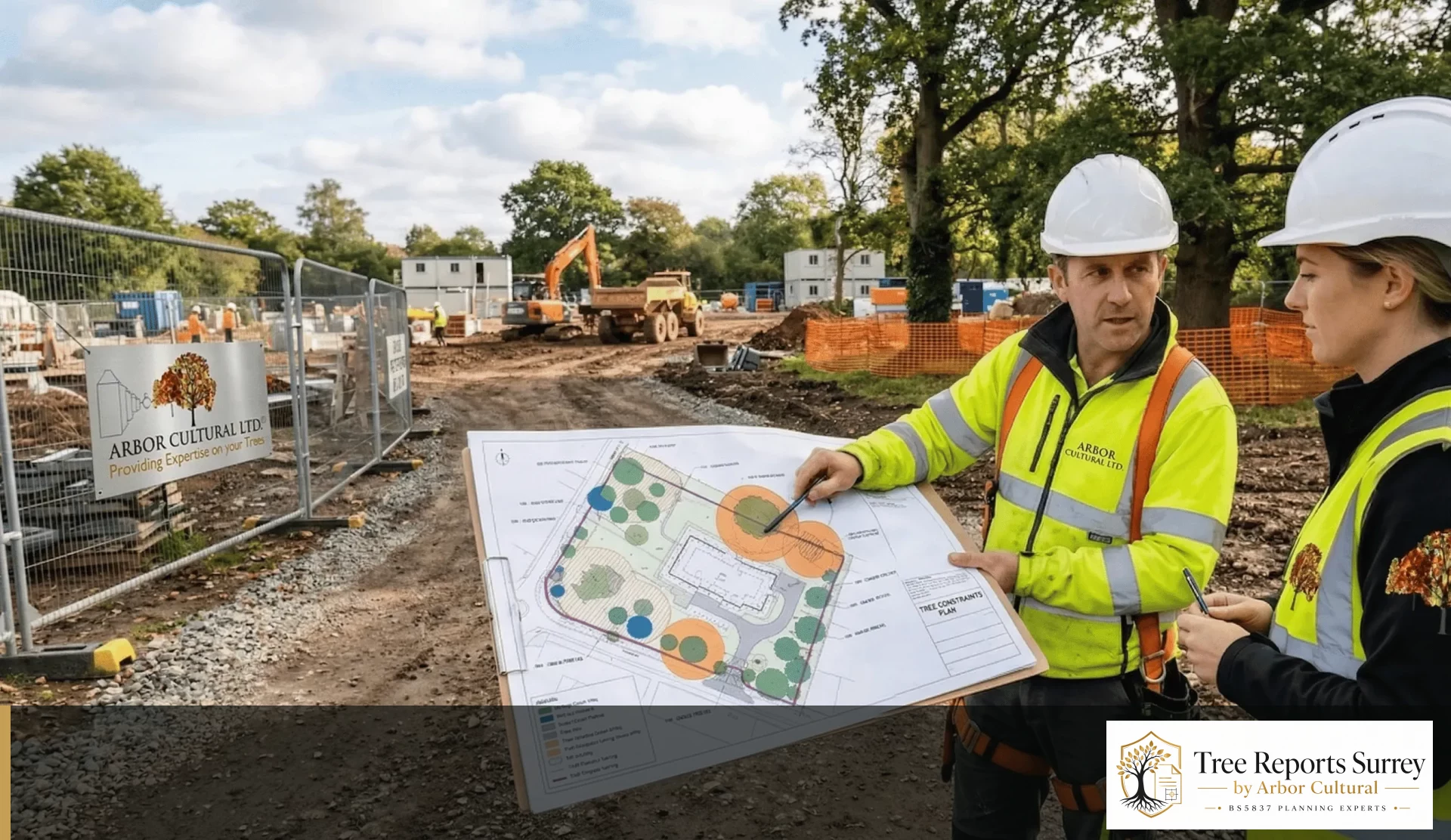
If the layout is still moving, survey and constraints information can help the architect make better decisions. If the design is already developed, the focus moves to assessing impacts and showing how retained trees can be protected.
If you already have a survey, send it. If you already have permission, send the condition. We can usually work out very quickly whether the next useful step is an update, an AIA, an AMS/TPP or site supervision.
Keep the tree information on the architect’s live drawing, not in a separate universe. If the footprint, levels, access or services change, we want the tree assessment checked against that same revision before it goes in.
A revised Brookwood design does not automatically mean starting the arboricultural work again. Send the new drawing and the previous report. We can identify what still stands and what has genuinely changed.
Use the wording from Woking Borough Council as the starting brief. If it asks for a Method Statement, an impact report will not answer the condition. If it asks for impact information, a protection drawing on its own is not enough. We match the work to the actual request.
For the fastest useful response on a Brookwood enquiry, put the address, latest drawings and council email in the same message. Add the topo and any old report if you have them. That is usually enough for a consultant to understand where the project has reached.
If the council has asked for tree information, send the exact wording.
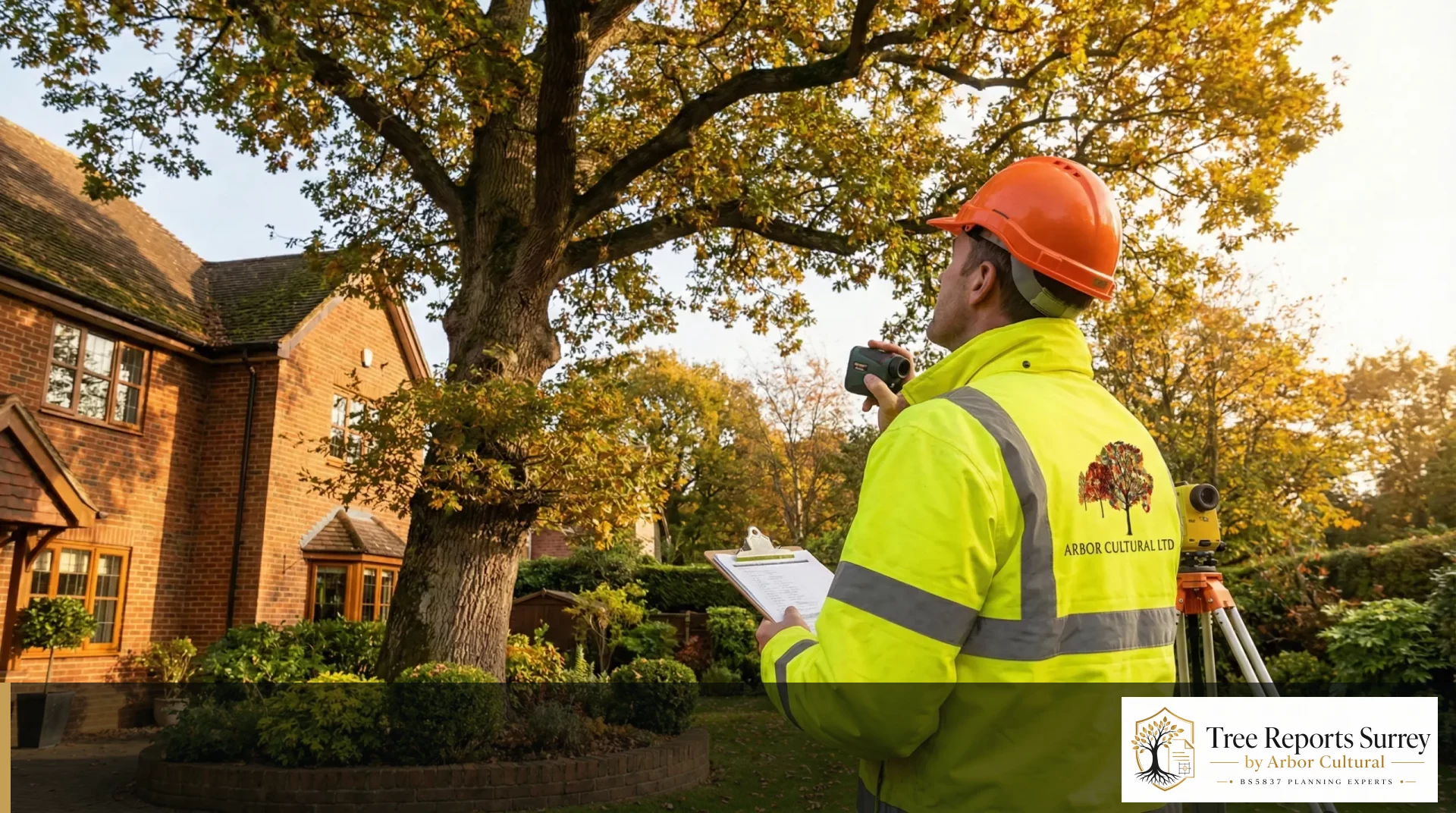
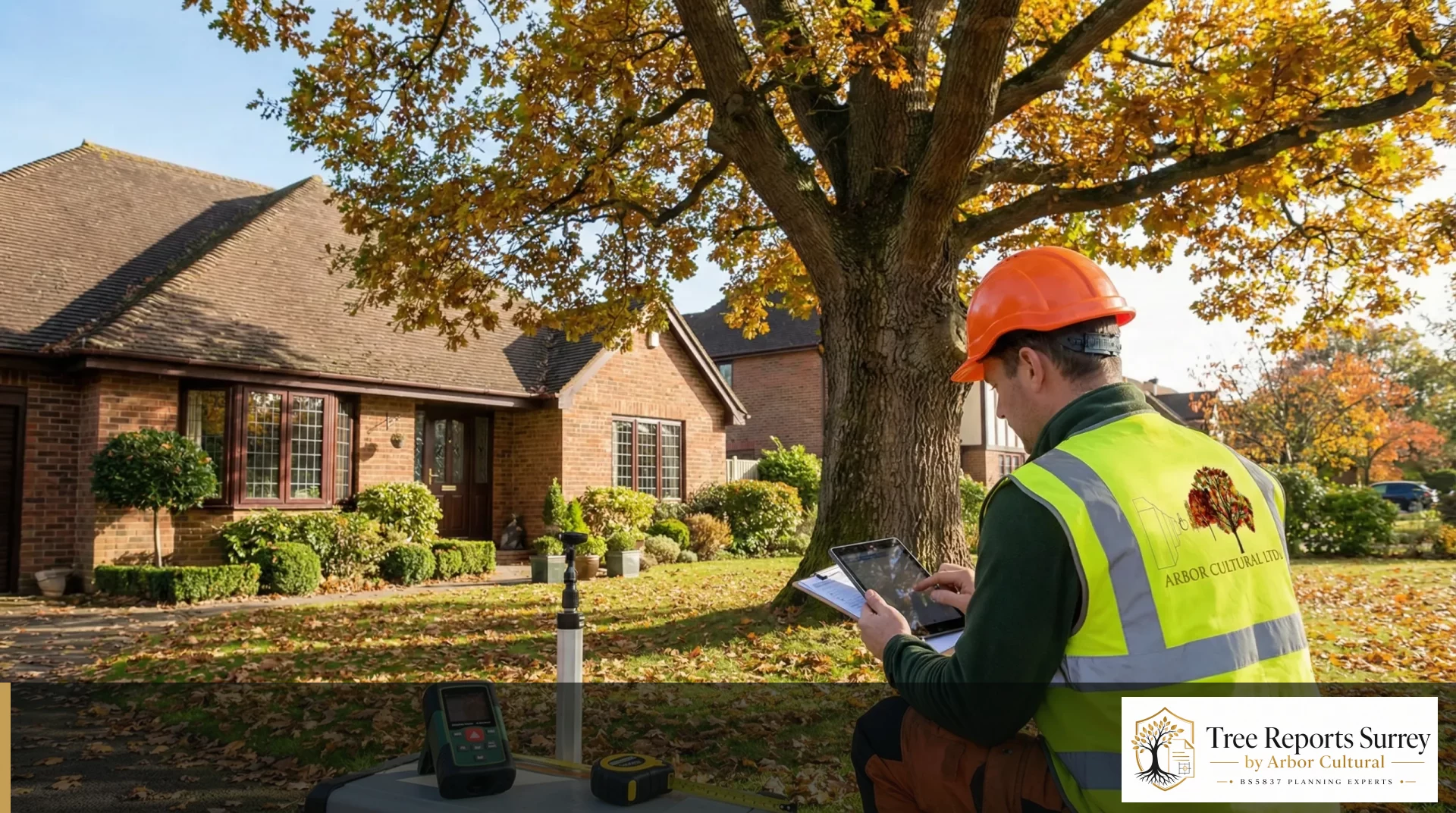
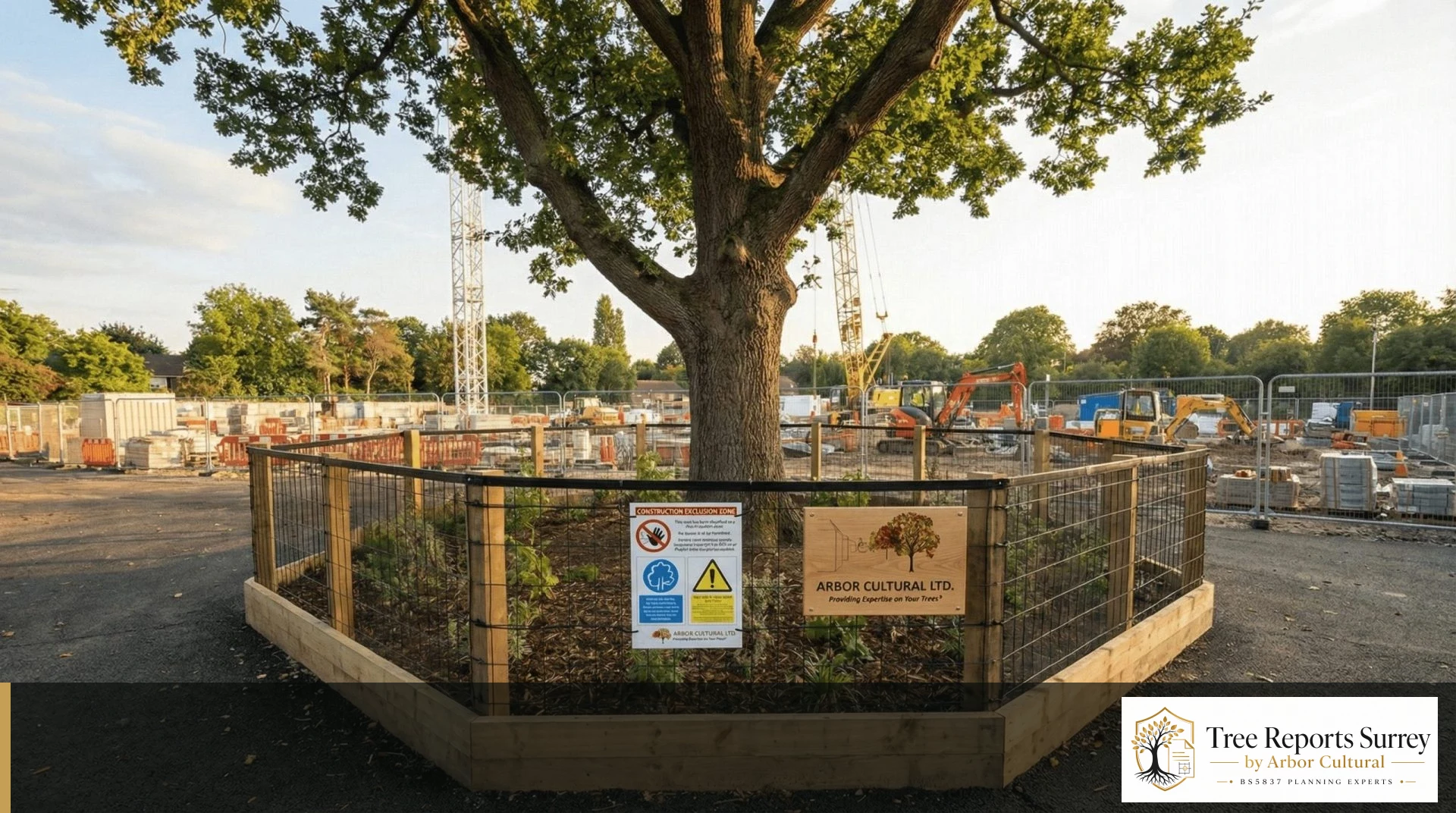
A request for a “tree report” does not always mean the same document. At the early design stage it may mean a BS5837 Tree Survey and Tree Constraints Plan. Once a planning layout exists, the missing piece may be an Arboricultural Impact Assessment. After permission, the authority may be asking for an Arboricultural Method Statement, Tree Protection Plan or supervision before work starts.
You do not need to make that decision yourself. Forward the email, validation request, tree-officer comment or planning condition and include the current drawings. We will review what is already available and explain the next useful step before you instruct.