BS5837 Tree Reports and Tree Surveys in Lightwater
A tree query does not always mean starting again. The missing item may be a targeted update, a revised plan or one specific BS5837 document. We can identify that before you commission unnecessary repeat work.
Once we have the latest plans and council wording, we can place the job at the right BS5837 stage and quote that stage properly. This keeps the commission proportionate to the actual planning requirement.
For this sort of job we normally check how close the excavation gets, whether the contractor has enough working room, what happens with drainage/access, and whether the finished extension still makes sense next to the retained crowns.
If the architect is still changing the Lightwater layout, send the current drawing now rather than waiting for the ‘final’ version. Tree information is most valuable while the footprint, access and service routes can still move without causing a redesign exercise later.
TPO and conservation-area controls sit alongside the BS5837 development process. If either applies to the Lightwater site, tell us. Tree quality under BS5837 and legal protection are different issues and should not be blurred together.
For the fastest useful response on a Lightwater enquiry, put the address, latest drawings and council email in the same message. Add the topo and any old report if you have them. That is usually enough for a consultant to understand where the project has reached.
If the council has asked for tree information, send the exact wording.
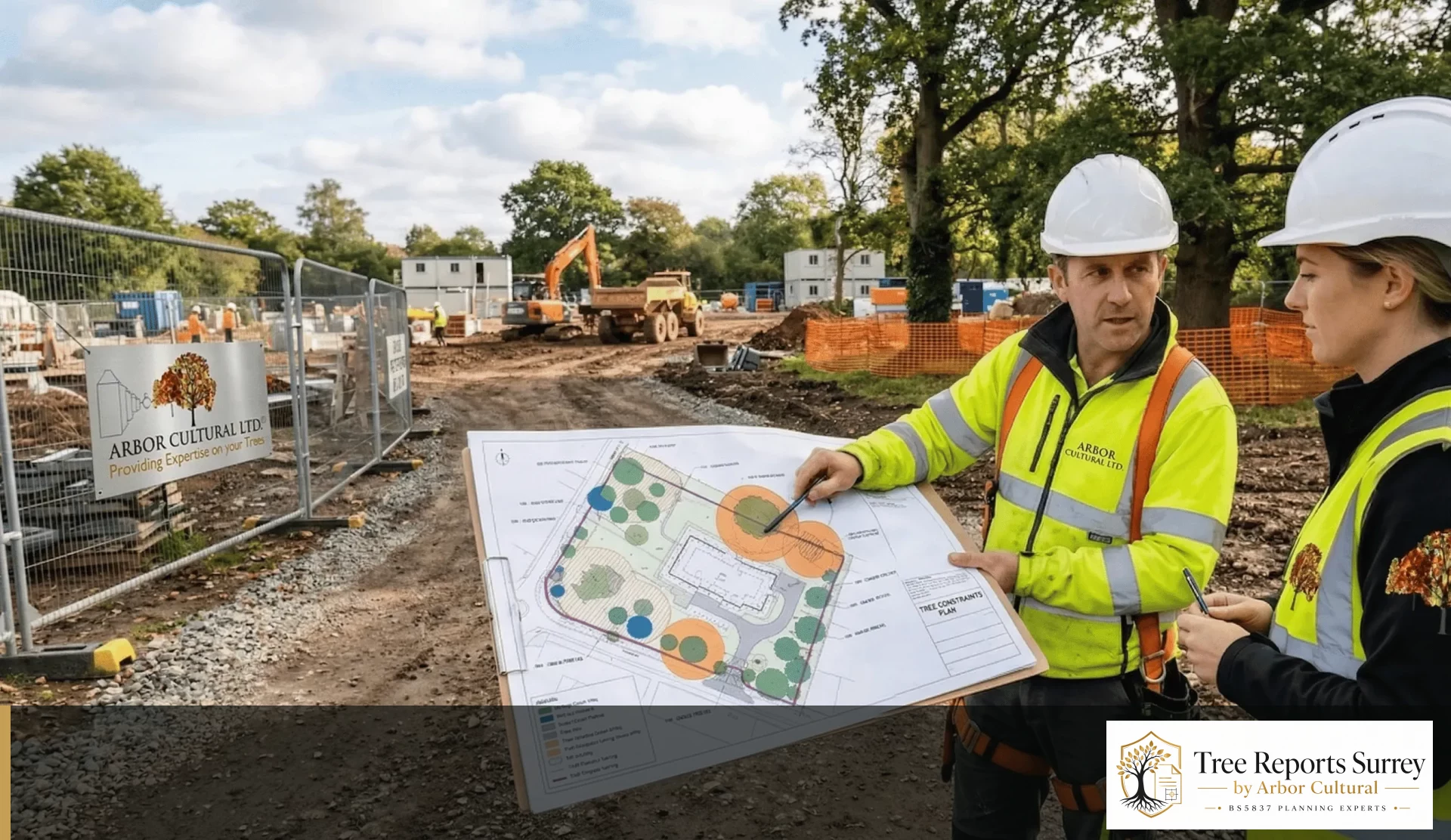
A request for a “tree report” does not always mean the same document. At the early design stage it may mean a BS5837 Tree Survey and Tree Constraints Plan. Once a planning layout exists, the missing piece may be an Arboricultural Impact Assessment. After permission, the authority may be asking for an Arboricultural Method Statement, Tree Protection Plan or supervision before work starts.
You do not need to make that decision yourself. Forward the email, validation request, tree-officer comment or planning condition and include the current drawings. We will review what is already available and explain the next useful step before you instruct.