BS5837 Tree Reports and Tree Surveys in Effingham
The issue may be foundations, access, surfacing, drainage, services, crown space or construction logistics rather than the building footprint alone. The report should deal with the whole relationship, not one measurement in isolation.
This simple coordination point prevents a significant amount of avoidable repeat work. If the design is still moving, we can keep the first stage useful for design. If the layout is fixed or the council has already asked a specific question, we can go straight to the document that answers it.
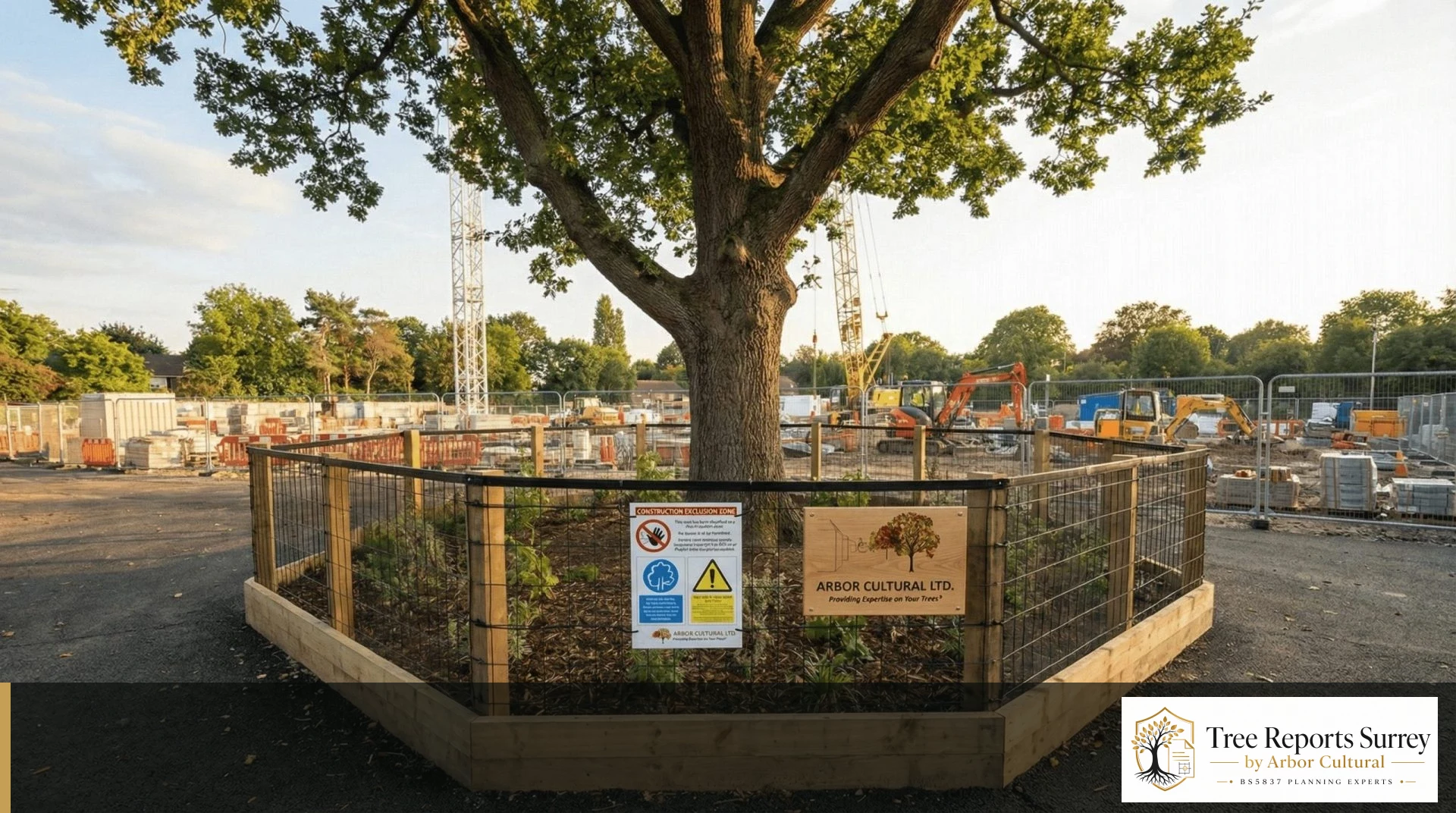
Once permission is in, the conversation changes from ‘is the design acceptable?’ to ‘how are we going to build this without breaching the tree conditions?’ The AMS, TPP and supervision points need to work on a real site, not just on paper.
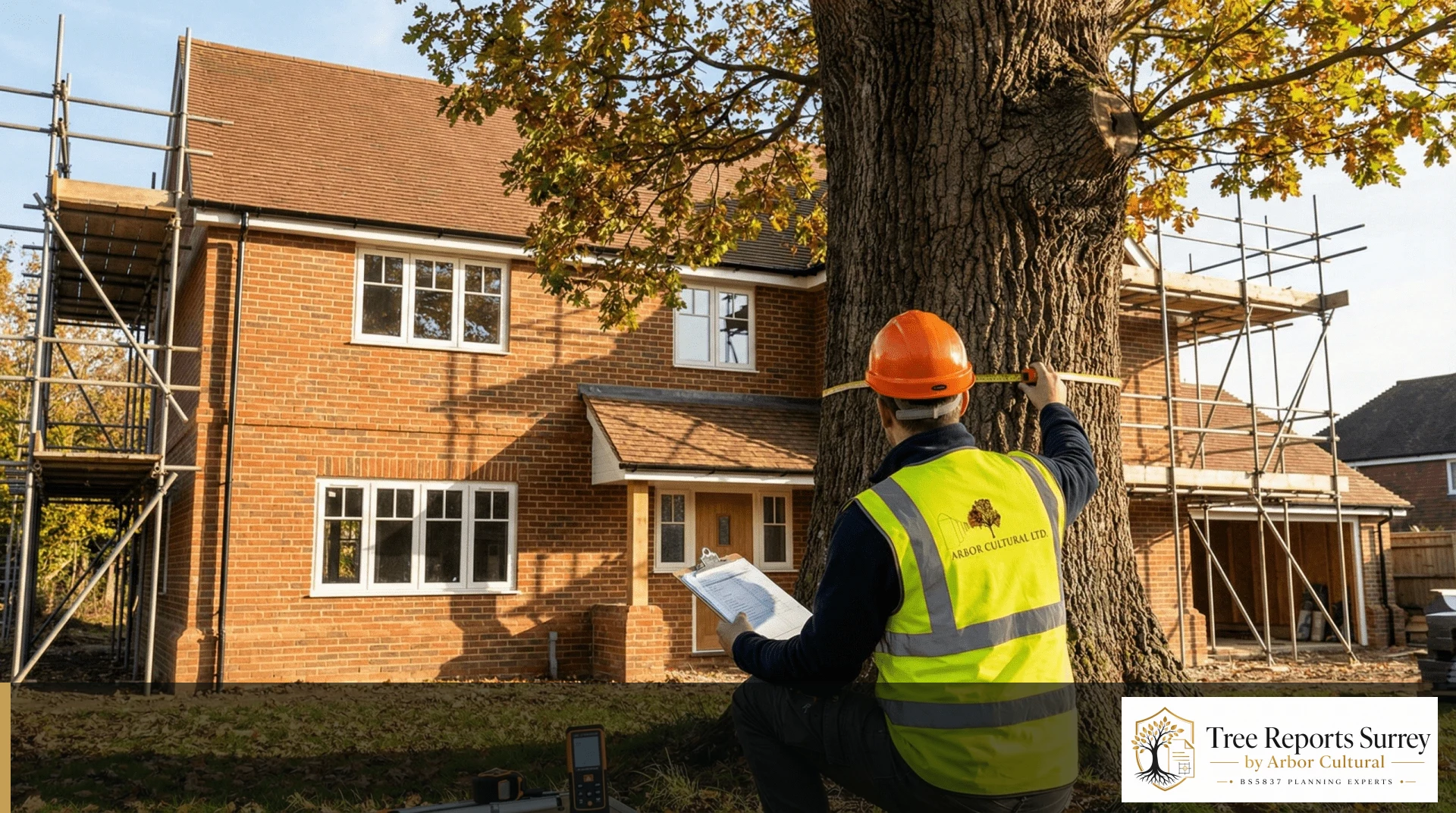
For a house extension in Effingham, the important questions are normally practical: how close is the excavation, what happens to roots, can the contractor work safely in the available space and will the completed extension remain comfortable alongside the retained crown?
If you are discharging a tree condition in Effingham, send both the approved planning drawings and the current construction information. We need to see whether what is now proposed on site still matches the strategy that Guildford Borough Council approved.
Homeowner, architect or developer — the starting point is the same. Show us what is being proposed and what the authority has asked for. We can deal with the report names after that.
If the council has asked for tree information, send the exact wording.
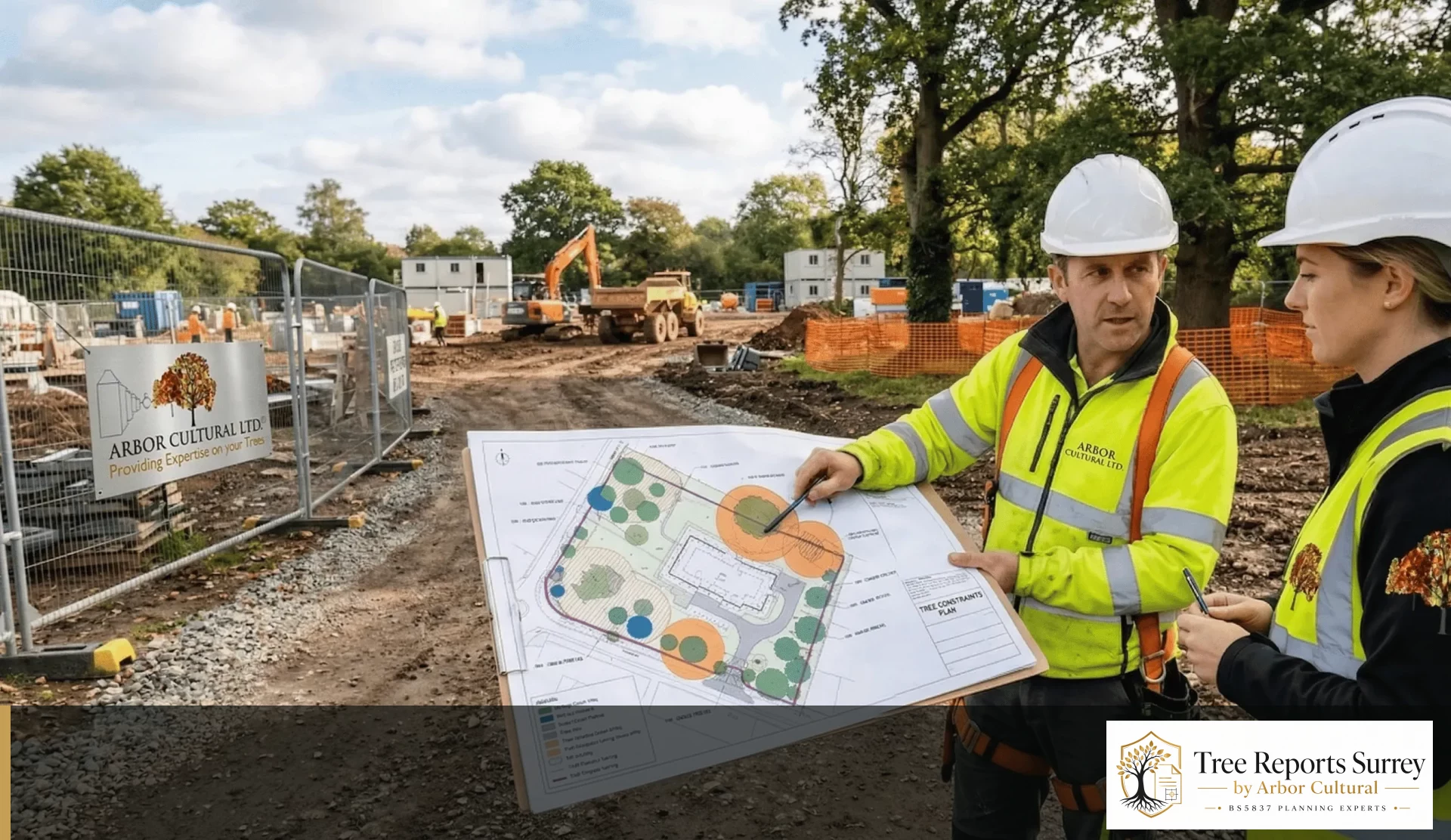
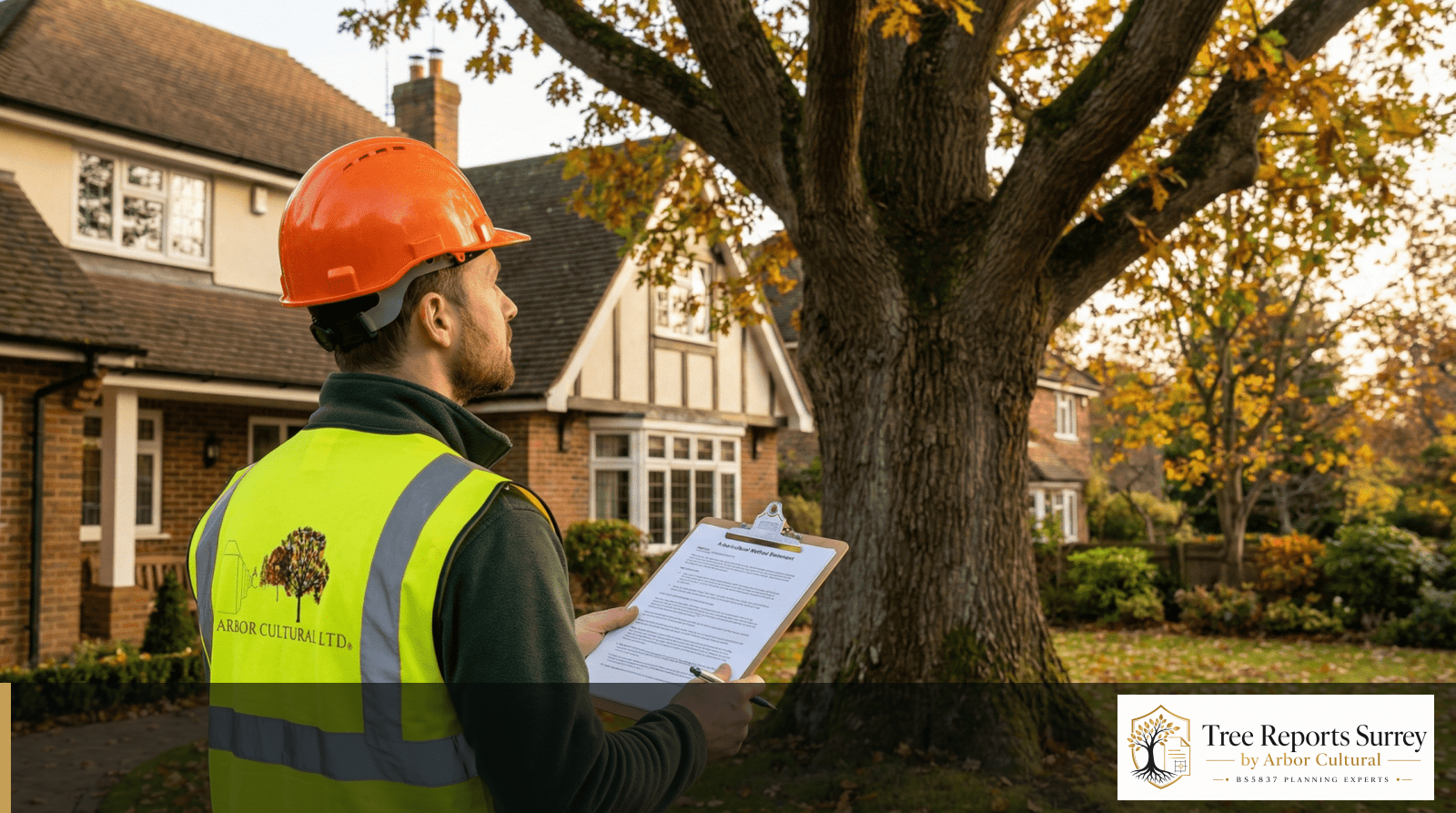
A request for a “tree report” does not always mean the same document. At the early design stage it may mean a BS5837 Tree Survey and Tree Constraints Plan. Once a planning layout exists, the missing piece may be an Arboricultural Impact Assessment. After permission, the authority may be asking for an Arboricultural Method Statement, Tree Protection Plan or supervision before work starts.
You do not need to make that decision yourself. Forward the email, validation request, tree-officer comment or planning condition and include the current drawings. We will review what is already available and explain the next useful step before you instruct.