★★★★★ 5.0 · 116+ verified reviewsBS5837:2012 planning specialistsAll Surrey councils covered020 4531 6444 · admin@arbor-cultural.co.uk
BS5837 tree reports Burpham and tree surveys for planning
★★★★★ 116+ verified reviewsBS5837:2012 planning specialists
Burpham · Surrey

BS5837 Tree Reports Burpham & Tree Surveys

Need a BS5837 tree report for a planning application in Burpham? Send the address, current plans and any Guildford wording. We will review what has been requested and provide a clear fixed-fee proposal.

Send the site address, current plans and the council wording. You do not need to know the report name first.

Burpham tree reports for planning

BS5837 Tree Reports and Tree Surveys in Burpham

A request for tree information can arrive at any point in the planning process. The important thing is to establish what the project has already done, what the authority is asking for now and which drawings are current. From there the next step is usually straightforward.

This simple coordination point prevents a significant amount of avoidable repeat work. If the design is still moving, we can keep the first stage useful for design. If the layout is fixed or the council has already asked a specific question, we can go straight to the document that answers it.

Tight plots run out of space quickly. Crowns, RPAs, parking, access and the contractor all want the same ground. A small design move early can save a much bigger tree argument later.

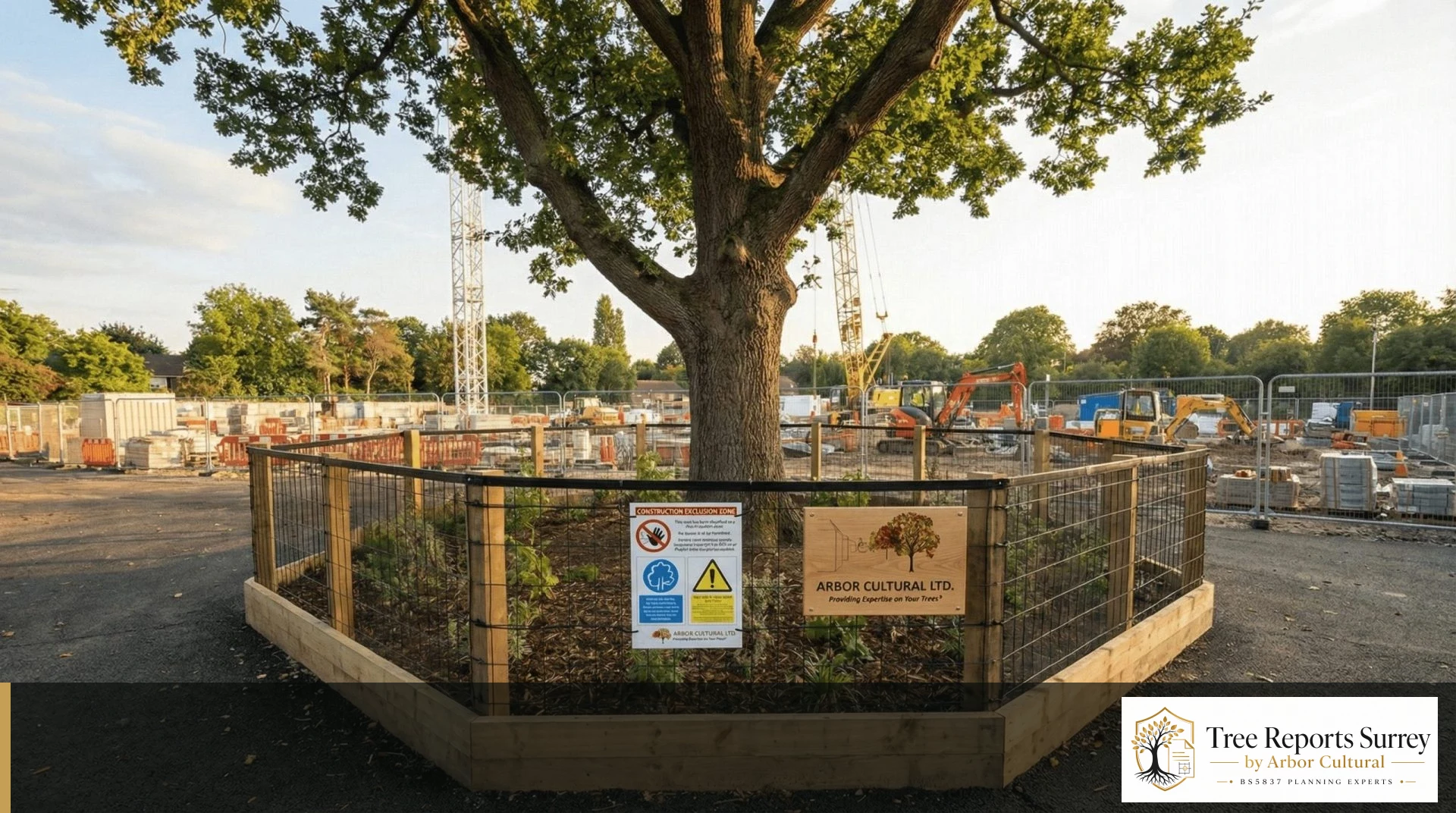
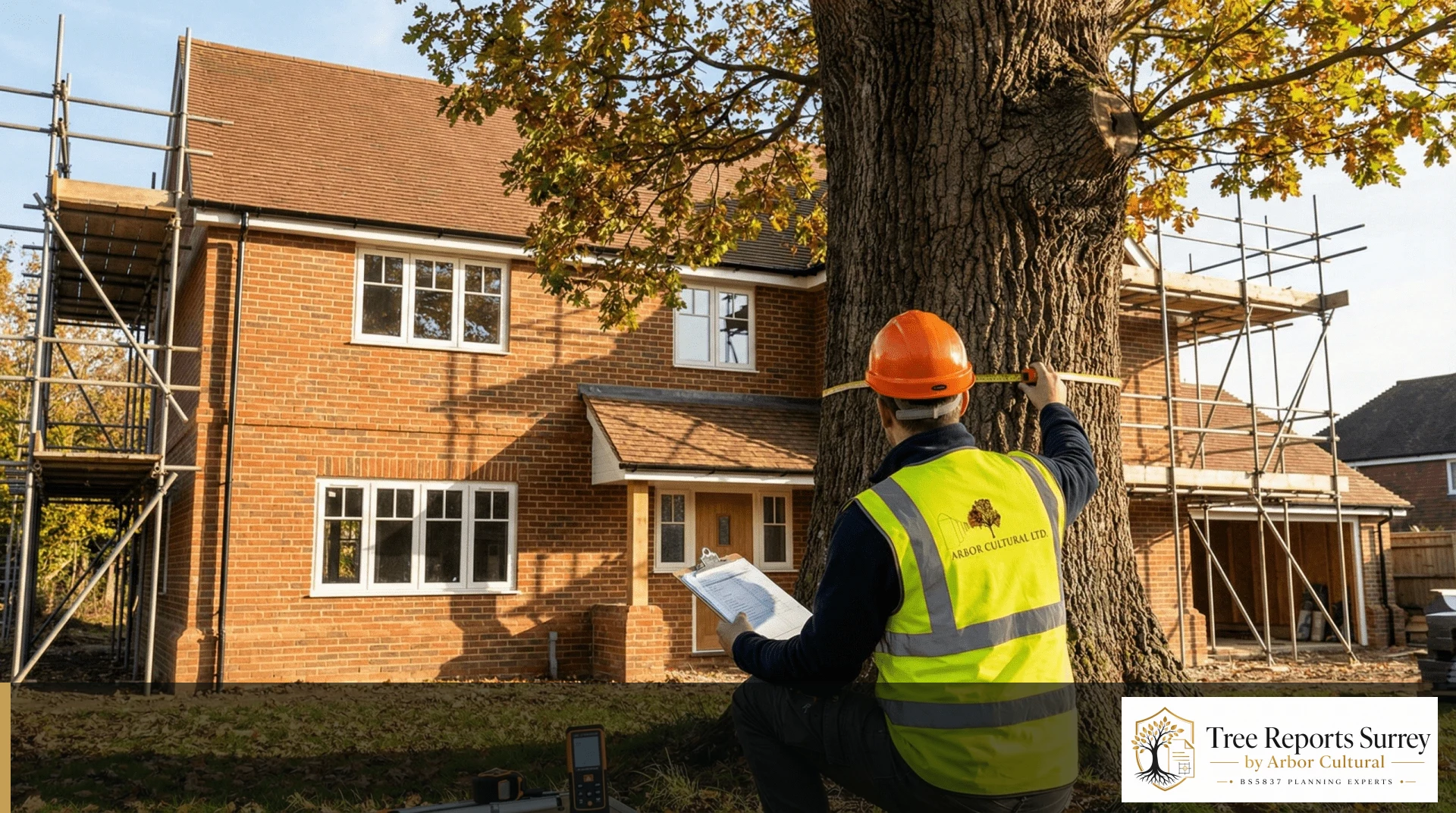
If construction access is tight on the Burpham site, flag it early. The completed development may sit comfortably away from retained trees while construction traffic, storage and working space create the real risk.

Guildford Borough Council is assessing the development proposal, so the arboricultural information has to connect to the footprint, access, surfacing, levels, services and construction method that form part of that proposal.

You do not need a perfect project pack to request a quote for Burpham. The current PDF plans, the site address and the wording you have received are enough to start a sensible review in most cases.

If the council has asked for tree information, send the exact wording.

A request for a “tree report” does not always mean the same document. At the early design stage it may mean a BS5837 Tree Survey and Tree Constraints Plan. Once a planning layout exists, the missing piece may be an Arboricultural Impact Assessment. After permission, the authority may be asking for an Arboricultural Method Statement, Tree Protection Plan or supervision before work starts.

You do not need to make that decision yourself. Forward the email, validation request, tree-officer comment or planning condition and include the current drawings. We will review what is already available and explain the next useful step before you instruct.
What we check from the drawings

The tree issue is not always the building itself.

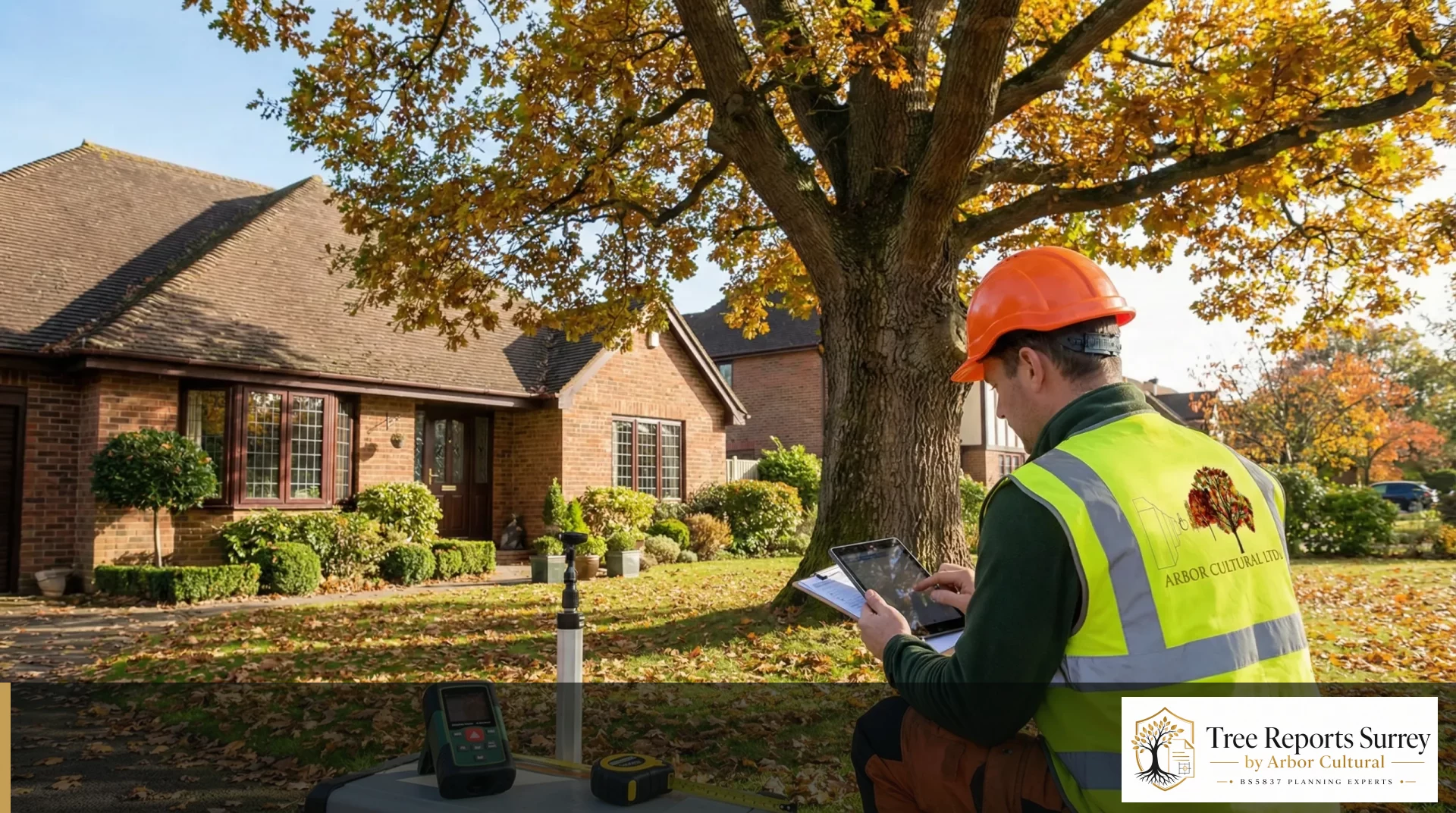
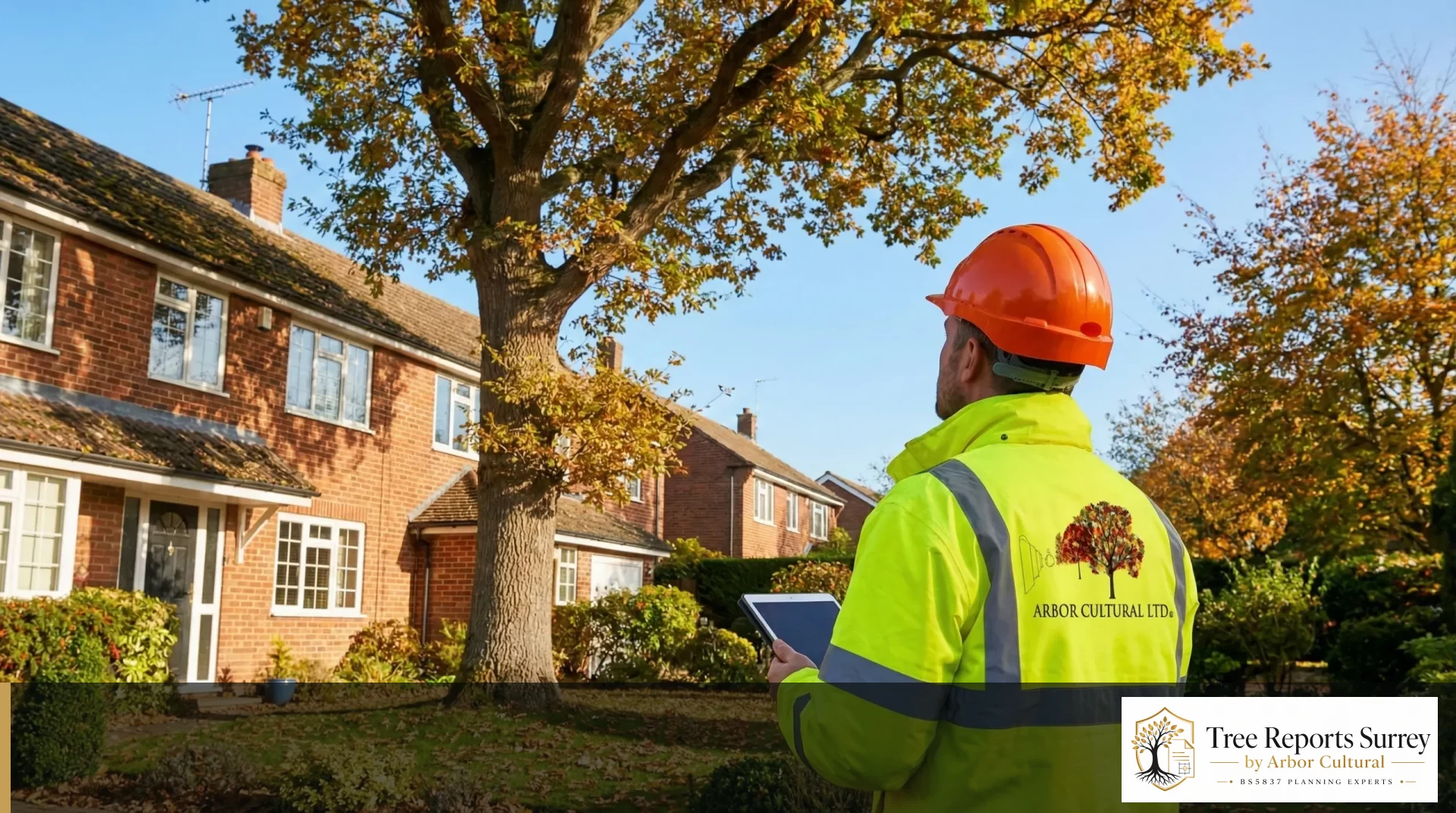
Once we see the site and proposal, we look at the whole development relationship rather than simply measuring the distance from the nearest trunk.

01

Buildings and excavation

How close the proposed foundations, demolition and level changes come to retained trees and their rooting areas.

02

Access and parking

Whether drives, turning areas, construction traffic or new surfacing create the main root or compaction issue.

03

Drainage and services

Routes for utilities and drainage can create conflicts even where the building footprint itself works well.

04

Crowns and future use

The completed development needs a sensible long-term relationship with retained crowns, light, gardens and normal occupation.

For homeowners, architects and developers

What working with us actually looks like.

If you are a homeowner, the simplest thing you can do is send the council email and the architect drawing. You are not expected to know whether the wording means a survey, AIA, AMS or TPP. We will explain it in plain English before you instruct.

If you are the architect or planning consultant, send the live drawing revision and any earlier tree information. We can work directly with the design team so the tree references and planning layout stay coordinated as the scheme changes.

If you are already post-permission, include the decision notice and tree conditions. At that point the focus is usually on getting the approved protection and construction detail ready so the project can move towards site without an avoidable pre-start delay.

If you prefer to speak first, call the team. If you already know what has been requested, use the quote form and attach the drawings. Either route is fine — the point is to get the real information in front of a consultant quickly.

What a strong BS5837 package should do

Make the planning position easy to follow.

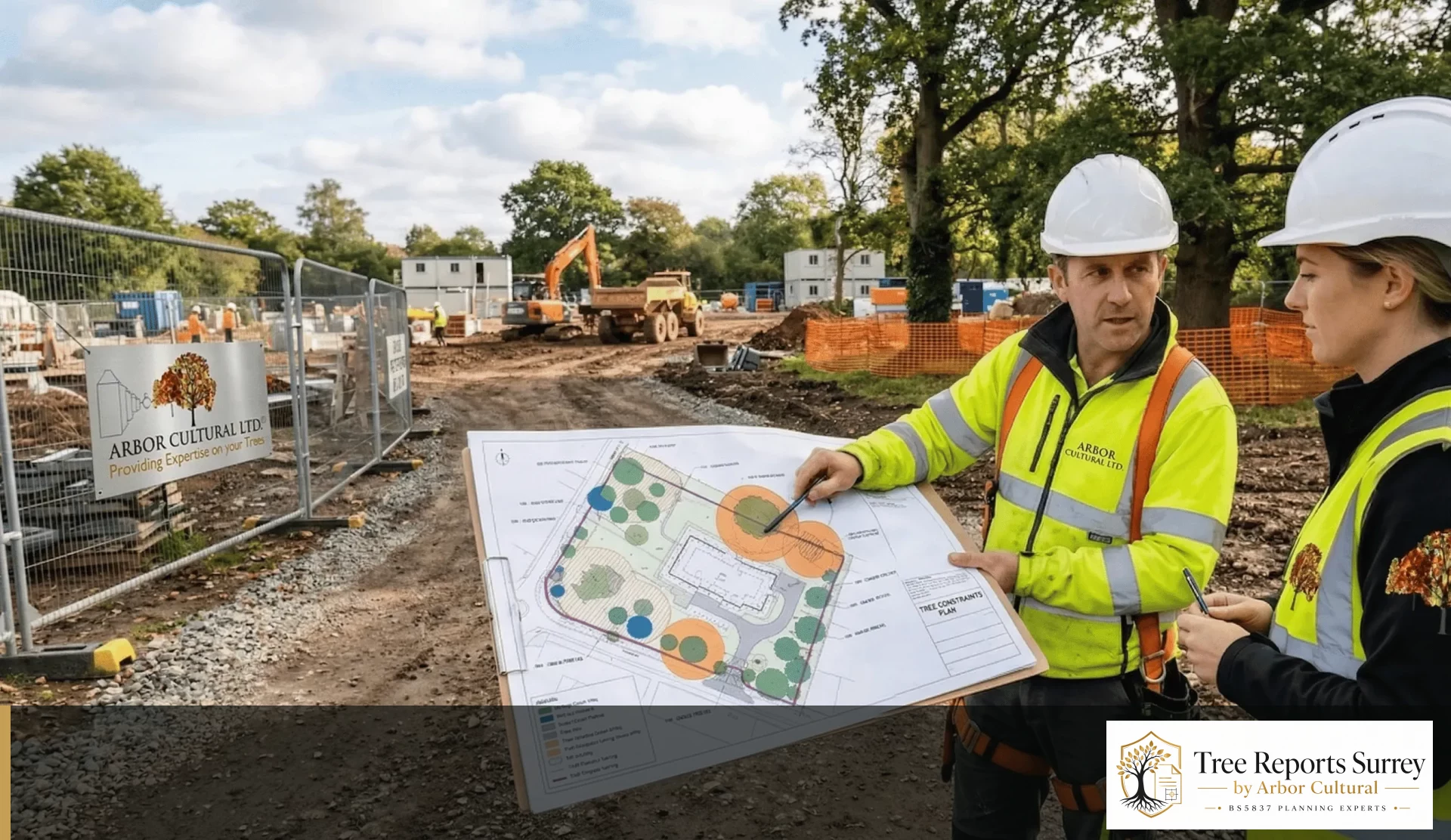
The survey should tell the design team which trees matter. The plans should show the constraints clearly. The impact assessment should explain what the proposed development changes. The construction documents should then show how the retained trees will be protected when the scheme is built.

That sounds obvious, but coordination is where many projects go wrong. Tree numbers change between documents. An AIA refers to an older layout. The drainage route appears after the tree report is finished. The contractor receives a protection plan that leaves no workable route into the site.

We try to remove those gaps. The arboricultural information should be technically sound, but it also has to work with the real design and the real construction sequence.

Where a design conflict can be solved early, solve it early. That is usually easier than asking a planning officer to accept an avoidable impact later.

01

Survey

Establish the tree information and constraints.

02

Design

Use that information while the layout can still respond.

03

Assess

Explain impacts and mitigation against the actual proposal.

04

Build

Turn the approved strategy into clear site controls.

Planning BS5837 services

Tree-survey and report services for Burpham

If you already know what has been requested, choose the relevant service. If you do not, send the plans and the council wording and we will tell you which service is the appropriate starting point.

Guildford planning context

Planning near trees in Burpham

Burpham is handled by Guildford Borough Council for local planning purposes. BS5837 provides the technical framework, but the documents still need to answer the specific request made on your project.

If Burpham is going through Guildford Borough Council, send the council wording with the same drawing revision you are actually submitting.

If a Tree Preservation Order or conservation-area control is involved, include that information. Legal tree protection and the BS5837 development assessment are related but separate matters; one does not replace the other.

If the project has already been submitted and Guildford has raised a tree query, send the whole response with the latest planning drawings. A focused update may be enough. We do not assume the only answer is to restart the entire arboricultural package.

View Guildford planning ↗
After you request a quote

A straightforward route from enquiry to planning information.

1. We review what you send. The address, drawings and council wording normally show the project stage and whether any earlier arboricultural work is available.

2. We confirm the work and fee. You receive a fixed-fee proposal describing what will be undertaken and what information is required from you before the visit or reporting stage.

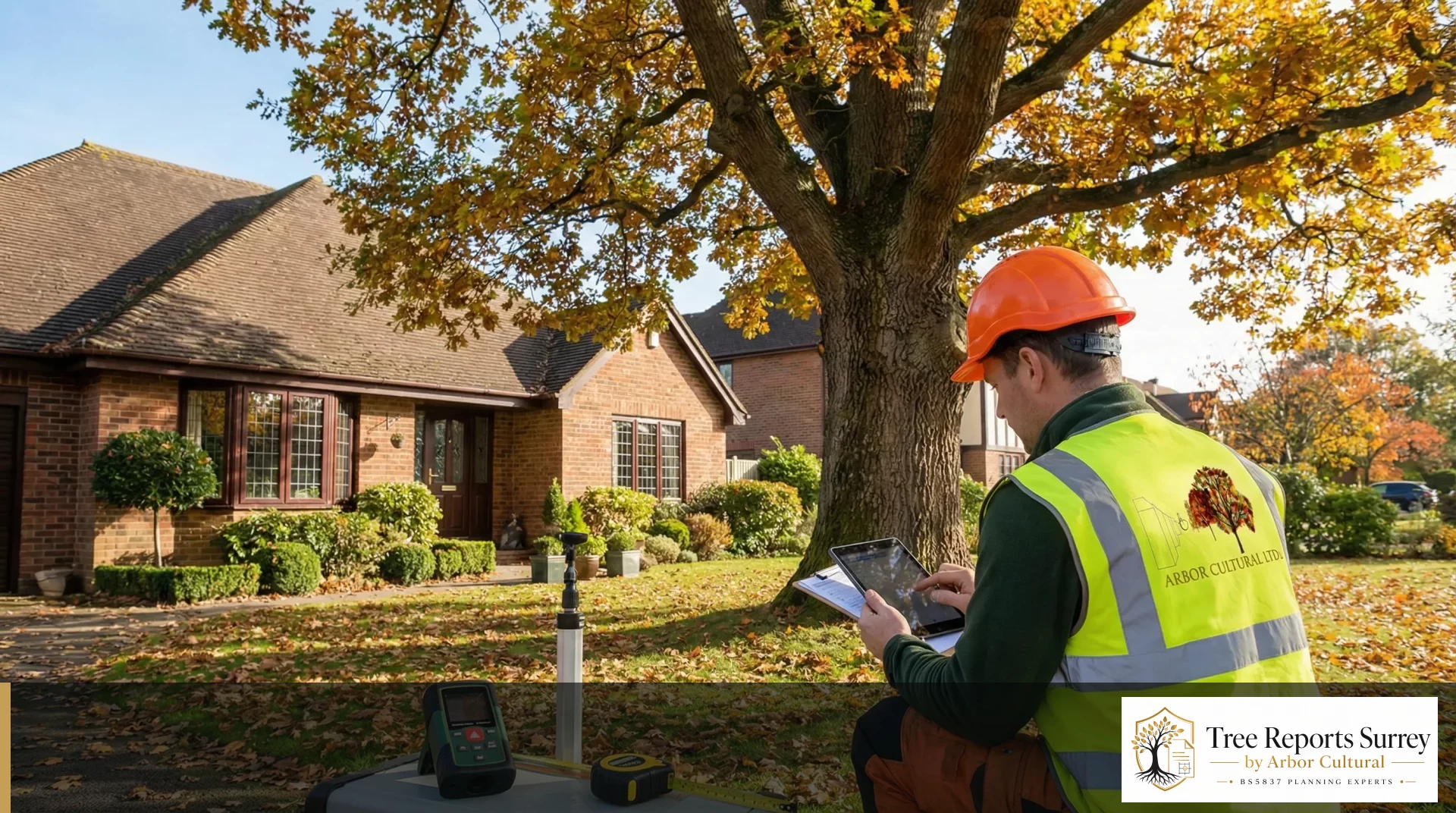
3. The site work is completed where required. For survey-based services, the relevant trees are inspected and recorded. For later-stage services, the approved information and current drawings are reviewed alongside any necessary site context.

4. The report or plan is prepared against the live project. We keep tree references and drawing revisions explicit so your architect, planning consultant or contractor can use the information without having to reinterpret it.

5. If the design changes, send the revision. We can confirm whether the existing work still stands or whether a targeted update is required before submission.

What we do not want you paying for.

We do not want you commissioning an AIA when the architect has not produced a layout worth assessing. We do not want you ordering a new survey without first checking whether a suitable existing survey can still be used. We do not want a contractor receiving a Method Statement that refers to an obsolete planning drawing.

The aim is to keep the work proportionate to the stage you are actually at and to make each document useful when it is produced.

That is also why the original council or consultant wording matters. It tells us what question needs answering now, rather than what might be needed six months later.

Common reasons planning tree information gets queried

Simple coordination mistakes can create avoidable delay.

Different drawing revisions. The report assesses one proposal and the application contains another.

Missing construction detail. The design may be acceptable, but there is no convincing explanation of how it can be built near retained trees.

Services added late. Drainage and utilities are routed through areas that the tree strategy assumed would remain undisturbed.

Neighbouring trees ignored. Off-site crowns or rooting areas influence the development even though the trees are not owned by the applicant.

Protection that cannot work on site. Fencing or ground-protection locations conflict with the access and logistics needed to build the scheme.

The practical answer

Get the tree information in front of the project team early enough to use it.

For design-stage work, that means survey and constraints information while the layout is still flexible. For planning-stage work, it means an AIA tied to the live proposal. For post-permission work, it means construction documents that reflect the approved strategy and the way the contractor is actually going to build.

If you are not sure which of those stages describes your Burpham project, send the information you have. We will make the next step clear.

Nearby Guildford areas

Tree reports around Burpham

If you have another site nearby, use the relevant local page below. The planning authority may be the same, but the arboricultural assessment still has to deal with the individual trees, drawings and development proposal on that site.

Keep the tree report and architect drawings together.

If the footprint, access, drainage, services, levels or surfacing change, send the revision. The tree report, AIA, AMS and TPP should not gradually end up describing different versions of the same project.

That becomes even more important when the job moves from planning to construction. The contractor needs controls that match what was approved and what will actually be built. A coordinated update before work starts is far easier than resolving conflicting documents after a query or site problem.

Burpham questions

BS5837 tree-report questions for Burpham

These are the questions clients commonly ask before instructing. If your own council wording is more specific, send it with the drawings and we can apply it to the project directly.

Do I need a BS5837 tree survey for planning in Burpham?

You may if trees on or close to the site can influence the proposed development. Send the latest plans and any Guildford wording and we can tell you what information is appropriate before you instruct.

Which council handles planning in Burpham?

For the locations covered by this page, the Local Planning Authority is Guildford Borough Council. Use the authority’s current guidance, but send us the exact wording from your own application or condition because that is what the project needs to answer.

Can a neighbour’s tree affect my Burpham application?

Yes. If its crown or rooting area can influence the development, it may need to be considered even though the tree is outside your ownership.

Can you work directly with my architect?

Yes. Direct coordination is often useful because the tree report and architectural drawings need to remain aligned to the same design revision.

How quickly can I get a tree report in Burpham?

Timing depends on site access, the number of trees, the report required, drawing availability and current workload. Send the project information and deadline and the proposal can confirm the expected programme.

When would I need an AIA in Burpham?

Usually when there is a real planning layout to assess. The AIA explains removals, retention, impacts and mitigation against the proposal being submitted.

Do I need every BS5837 document before I submit planning?

Not necessarily. Some projects need survey and constraints information first, then an AIA for submission, with AMS/TPP requirements dealt with later through conditions.

Can I get a fixed-fee quote before instructing?

Yes. Send the available project information and we can provide a clear proposal for the defined work before instruction.

Burpham · ready to send?

Send the plans and the council wording. We will make the tree-report requirement clear.

Get a fixed-fee proposal for the BS5837 tree survey, report or construction-stage arboricultural work needed for your Burpham project.