
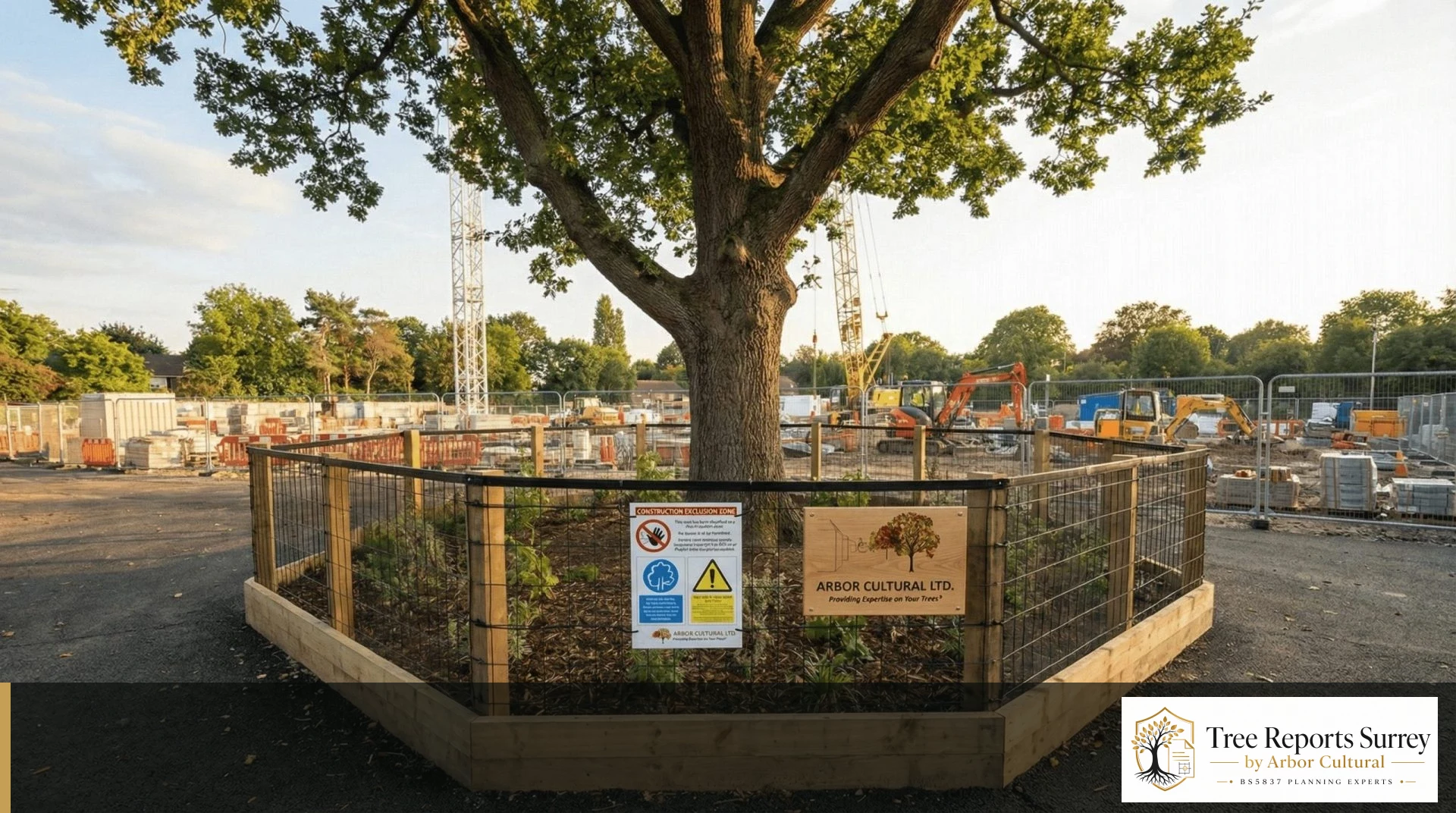
Put the protection measures on a drawing the contractor can use
A Tree Protection Plan is the site-facing drawing for retained trees. It should show exactly where protective fencing is installed, where ground protection is required and where construction activity is restricted.
The TPP is the drawing that should make tree protection obvious at a glance. It shows where barriers go, where ground protection is needed and which parts of the site are restricted while work is underway.
This matters because the risk to retained trees often comes from ordinary site activity: vehicles, storage, mixing, excavation and repeated trafficking. Protection needs to be coordinated with how the contractor actually intends to use the site.
A plan that cannot coexist with access and logistics is unlikely to work in practice. It is better to identify those conflicts before site setup than after protective fencing has already been moved.
What you receive
The exact output depends on the site and project stage, but the work should always be clear, coordinated and usable by the people making the next decision.
- Scaled tree protection drawing
- Protective fencing positions
- Ground protection zones where required
- Construction Exclusion Zones and restricted access areas
- No-dig or controlled-working annotations
- Cross-reference to AMS and supervision requirements
The finished information should be easy for the client and design team to understand, technically defensible for the Local Planning Authority and practical enough to carry forward into the next project stage.
Delivered by Arbor Cultural: read the main Tree Protection Plan service information →